


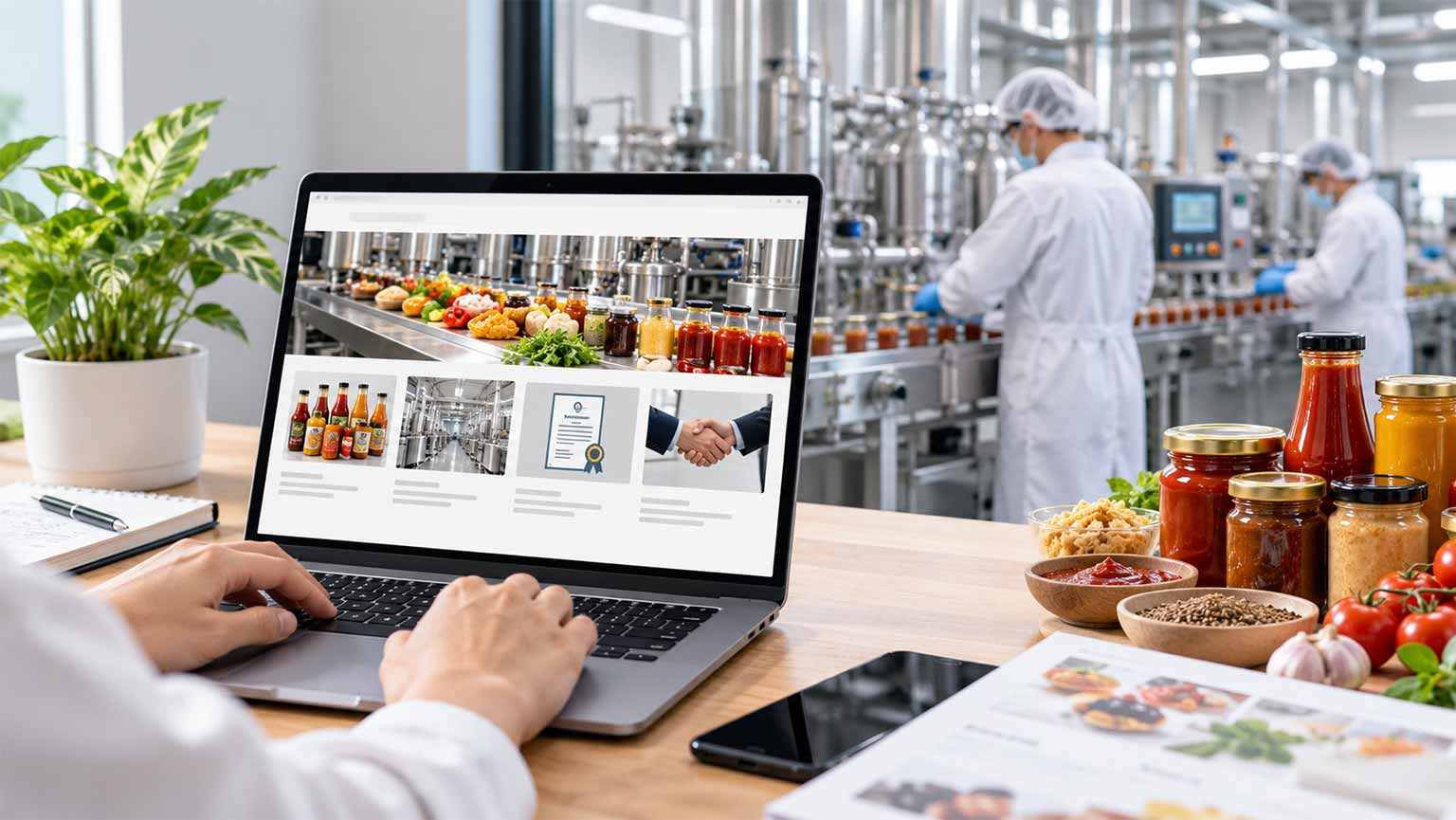
What Should a Food Manufacturer Put on Its Website?
A food manufacturer website does not need to contain every piece of information your company has. It needs to answer the questions a potential buyer is likely to have before deciding whether to contact you.
For food manufacturers in Malaysia, especially businesses based in Johor or Johor Bahru and serving customers in Singapore, a useful website should make it easy to understand what you manufacture, what your factory can do, what certifications you have, whether you offer OEM or private label services, and how buyers can get in touch.
The simple test is this:
Can a potential buyer understand your company, products and capabilities without having to contact your sales team just to ask basic questions?
If the answer is no, your food manufacturer website content may need to be reviewed.
What Does a Food Manufacturer Website Really Need to Show?
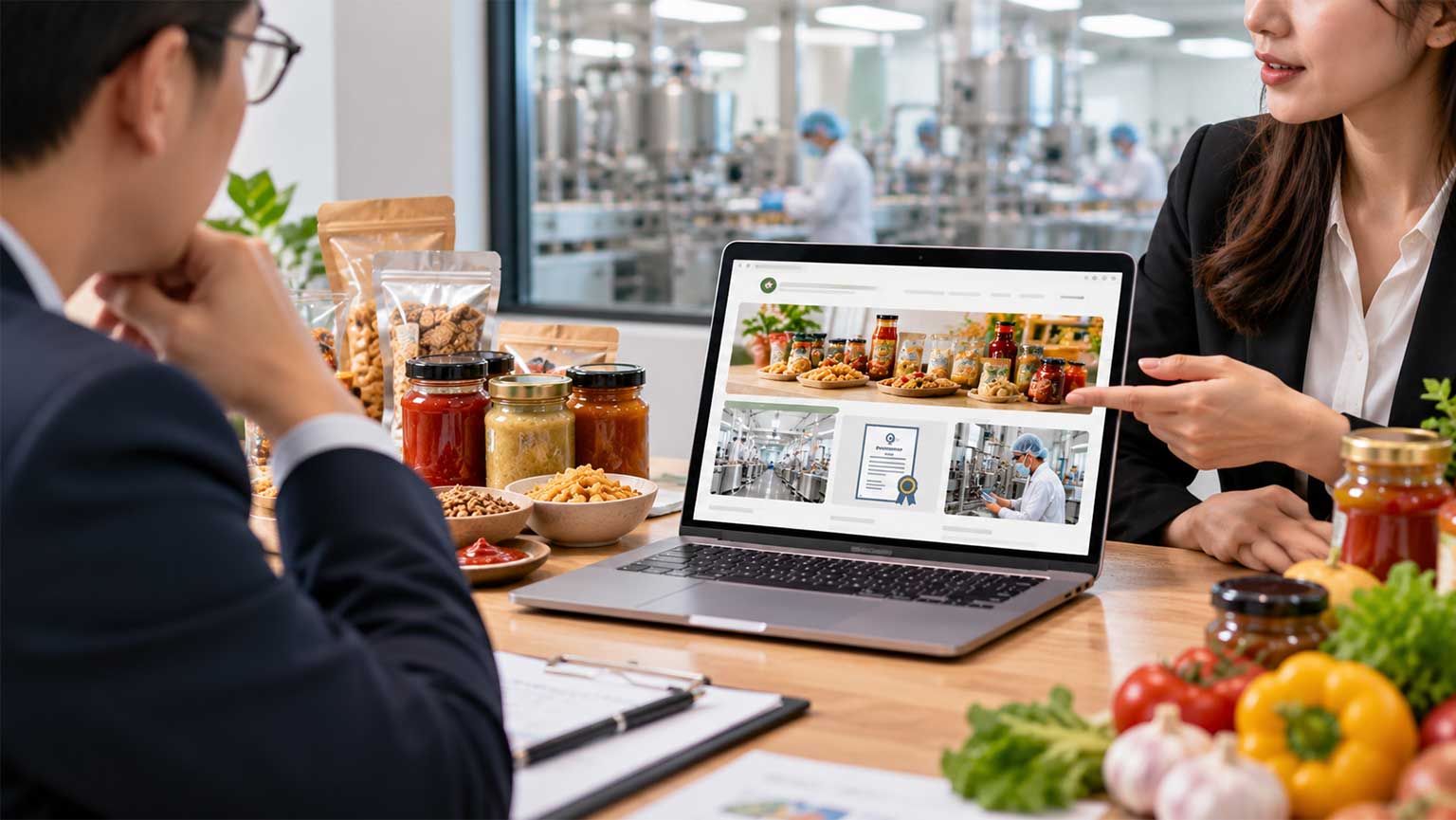
The answer is not simply “more information”.
A good food manufacturer website should show the right information in the right places. A buyer may visit your website because they are looking for a particular product, an OEM partner, a private label manufacturer or a supplier in Malaysia.
Once they arrive, they may immediately want to know:
- What products do you manufacture?
- Can you produce what I need?
- Where is your factory?
- What certifications do you have?
- Do you provide OEM or private label services?
- Who do you normally work with?
- How can I make an enquiry?
Your website should help them find these answers without making them dig through several unrelated pages.
This is especially useful when your business serves customers across Johor, Johor Bahru, Malaysia and Singapore, where buyers may be comparing suppliers from different locations.
1. Can Visitors Understand What Your Company Does?
Before showing detailed product information, your food manufacturer website should make one thing clear:
Who are you and what do you manufacture?
You do not need a long company history to explain what your business does. A concise introduction can cover your manufacturing focus, location, experience, product categories and the types of customers you serve.
For example, a manufacturer based in Johor Bahru may want to clearly state its location and the markets it serves instead of making visitors search for this information on the Contact page.
The goal is simple: when someone lands on your website for the first time, they should be able to understand what your company does within a few seconds.
2. Can Buyers Easily Find Your Products?
A buyer should not have to scroll through a long paragraph to figure out what you manufacture.
Your food manufacturer website content should organise products into clear categories where appropriate.
Depending on your business, this might include:
- Sauces and condiments
- Snacks
- Beverages
- Frozen food
- Ready-to-eat products
- Baking ingredients
- Food ingredients
Individual product pages can then provide more useful information, such as product descriptions, packaging options, sizes, applications and specifications.
The exact information will depend on what you manufacture, but the principle is the same:
Make it easy for buyers to understand your products before they enquire.
3. Can Your Website Show What Your Factory Can Actually Do?
This is where a food manufacturing website should go beyond simply listing products.
A potential buyer may already know what product they want. Their next question could be:
“Can this manufacturer actually produce it according to my requirements?”
Your website can explain relevant manufacturing capabilities, such as:
- Production processes
- Processing methods
- Production capacity, where appropriate
- Packaging capabilities
- Product formats
- Customisation options
- Quality control processes
- OEM support
You do not need to reveal confidential production information.
Instead, give buyers enough information to understand whether your capabilities are relevant to their project.
For example, if your company supports customised packaging or product development, this should be clearly explained rather than left for the sales team to mention later.
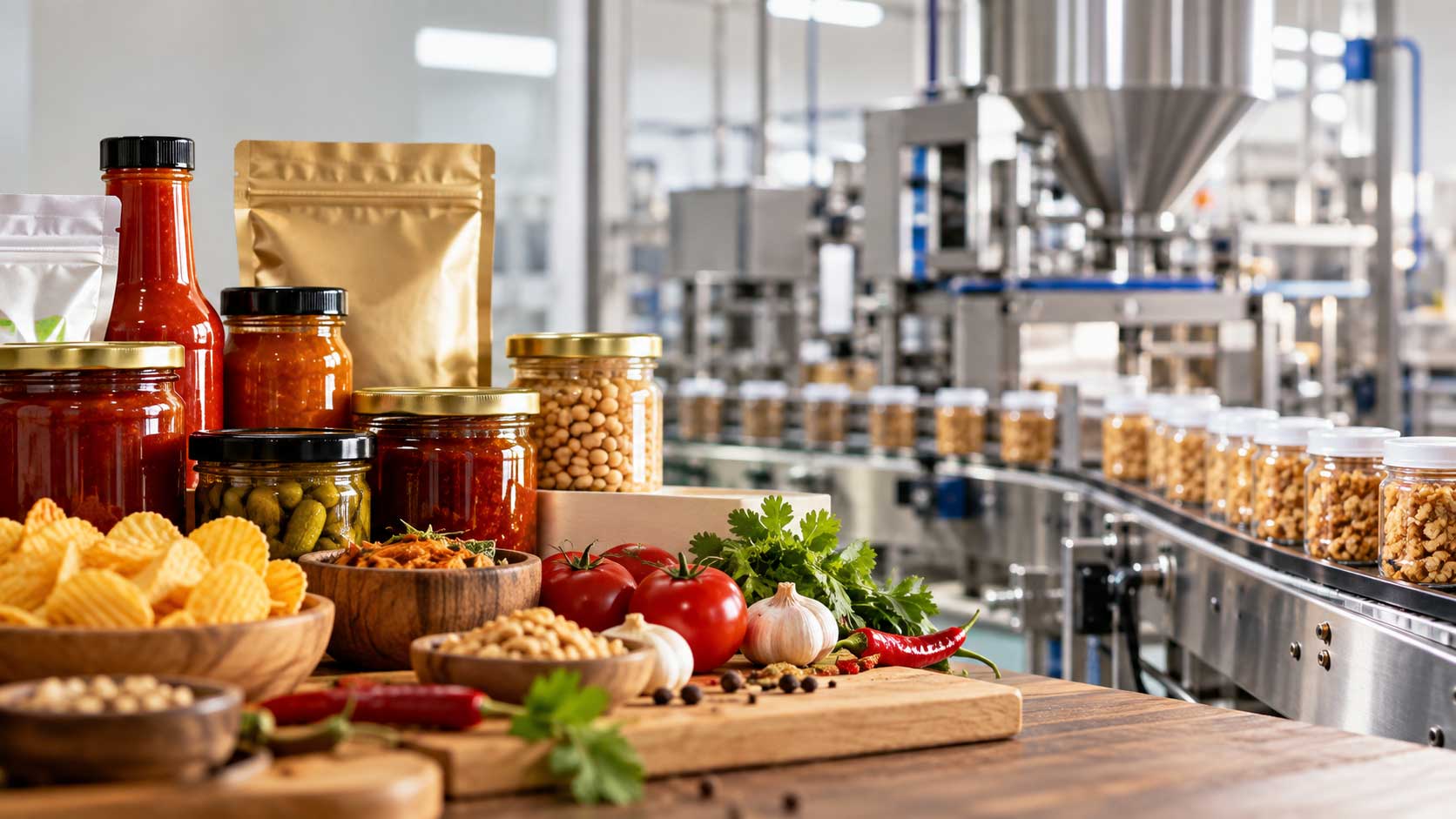
4. Does Your Website Show Your Factory and Facilities?
For a manufacturer, real photographs can help visitors understand the business more clearly.
A food manufacturer website can include relevant images of:
- Production areas
- Machinery and equipment
- Packaging lines
- Storage areas
- Quality control areas
- Research and development facilities
These images do not need to show every corner of the factory.
Choose photographs that genuinely represent your business and help potential buyers understand the scale or working environment of your operation.
For manufacturers in Johor, this can also help potential customers understand where the business operates, particularly when serving clients in Johor Bahru, other parts of Malaysia or nearby Singapore.
The important point is to use real business information and real photographs wherever possible rather than presenting generic images as if they were your actual facilities.
5. Are Your Certifications Easy to Find?
For buyers evaluating a food manufacturer, certifications and food safety standards can be important information to review.
Your food manufacturer website content should make relevant certifications easy to find instead of hiding them at the bottom of a page.
Depending on what your company actually holds, this may include information about:
- Halal certification
- HACCP
- GMP
- ISO standards
- Food safety systems
- Other relevant certifications or standards
Only publish certifications that your company actually holds, and keep publicly available documents updated.
You can also provide a short explanation of what each certification means for your manufacturing operation rather than simply displaying a row of logos.
This gives visitors more context and helps them understand the information they are looking at.
6. Do You Offer OEM or Private Label Manufacturing?
If your company provides OEM or private label services, do not make buyers guess.
A potential customer may be looking for a manufacturer because they already have a product concept or brand but do not have their own production facility.
A food manufacturing website can explain what your company actually supports, such as:
- Product development
- Formulation or recipe support
- Custom packaging
- Private label production
- OEM manufacturing
- Product customisation
- Packaging formats
- Minimum order requirements, where appropriate
You can also explain the general enquiry process so buyers know what information they should prepare before contacting you.
This can be especially useful for businesses looking for an OEM food manufacturer in Malaysia or a manufacturing partner serving customers across Johor and Singapore.
7. Can Buyers Get the Product Information They Need?
Not every buyer is ready to contact your sales team immediately.
Some may want to compare products internally first.
This is why useful food manufacturer website content can include downloadable resources such as:
- Product catalogues
- Product specifications
- Brochures
- Packaging information
- Technical information
- Certifications
- Frequently requested documents
If you provide downloads, make sure the information is current.
An old catalogue or outdated certificate can create more questions instead of making the buying process easier.
The purpose of these resources is not to make the website look more complete. It is to help buyers get the information they reasonably need before moving to the next step.
8. Does Your Website Explain Who You Serve?
A potential buyer may also want to know whether your company works with businesses like theirs.
Your food manufacturer website can explain the types of customers or industries you serve, such as:
- Food brands
- Retailers
- Distributors
- Wholesalers
- Restaurants and foodservice businesses
- Other manufacturers
- Export customers
If your company has experience serving particular markets, you can explain this naturally.
For example, a manufacturer in Johor may serve businesses across Malaysia as well as customers connected to Singapore. If that is part of the actual business, the website can explain it clearly.
There is no need to list every possible industry simply for SEO. Focus on the customers your company genuinely serves.
9. Is It Easy for Buyers to Make an Enquiry?
Once a visitor has found the information they need, the next step should be obvious.
Make it easy for them to contact your team through options such as:
- Enquiry form
- Phone
- Office or factory location
- Business hours
For B2B enquiries, the form can also ask for useful information such as:
- Product of interest
- Estimated quantity
- Packaging requirements
- Target market
- OEM or private label requirements
- Project details
This can give your team more useful context when responding.
A website should not make a potential buyer understand everything about your company and then make them search again just to find out how to contact you.
How Should Food Manufacturer Website Content Be Structured?
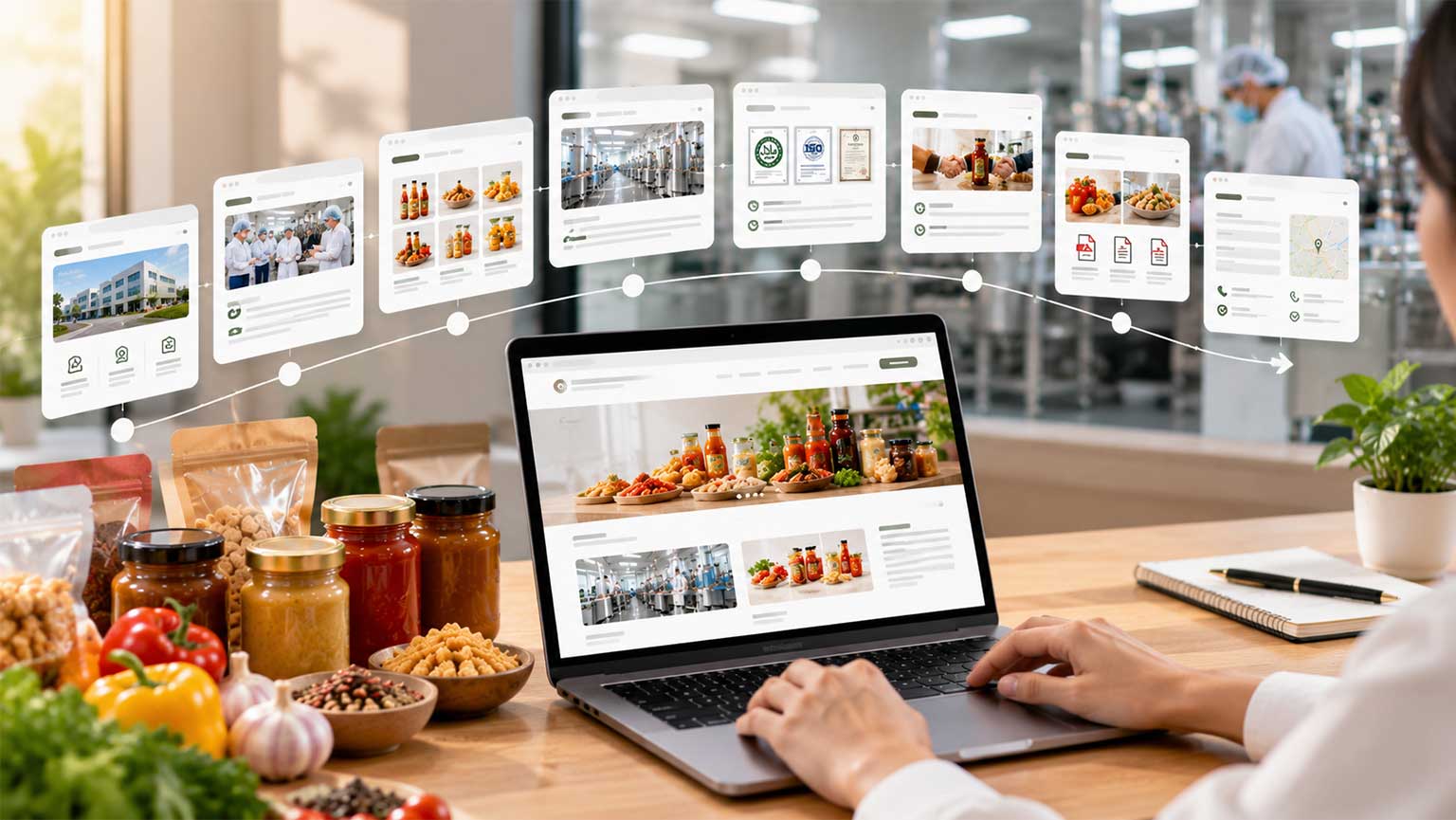
Having the right information is only part of the job.
The way your food manufacturer website content is organised also affects how easily buyers can understand your business.
You do not necessarily need a complicated site structure.
A simple structure could be:
Homepage
↓
About Us
↓
Products
↓
Manufacturing Capabilities
↓
Factory & Facilities
↓
Certifications
↓
OEM / Private Label
↓
Downloads
↓
Contact / Enquiry
This gives visitors a natural path:
Understand the company → Explore products → Check capabilities → Build confidence → Make an enquiry
If you are still deciding what type of website structure fits your food business, you can also read our guide on choosing a website for the food industry.
A Simple Test: Can Your Website Answer These 8 Questions?
Instead of asking whether your website has enough pages, try looking at it from a buyer’s perspective.
Open your food manufacturer website and ask:
- What does this company manufacture?
- Can I easily find the products I am looking for?
- Can this factory produce what I need?
- Where is the company located?
- What certifications or standards does it have?
- Does it provide OEM or private label manufacturing?
- Can I get the product information I need?
- How do I contact the company?
If a potential customer cannot find several of these answers without contacting your team, that does not necessarily mean your company lacks information.
It may simply mean the food manufacturing website needs better organisation, clearer content or easier navigation.
What About SEO for a Food Manufacturer Website?
SEO should support useful information rather than change the way your website speaks to customers.
For example, a food manufacturer website can naturally create useful pages around products, manufacturing capabilities, OEM services, certifications, industries served and frequently asked questions.
You do not need to repeat the same phrase in every sentence.
Instead, make each page useful for a specific purpose and use relevant wording naturally.
Google’s SEO Starter Guide provides guidance on creating websites that are easier for search engines to understand while still focusing on useful content for visitors.
For businesses in Malaysia, location information can also be useful when it accurately reflects the business. If your company operates in Johor Bahru, serves customers across Johor, or works with businesses in Singapore, state this clearly where relevant.
The important thing is that the information should describe your actual business, not be added simply to insert more location keywords.
Does Every Food Manufacturer Need the Same Website Content?
No.
The right food manufacturer website content depends on the company’s products, customers and business model.
A manufacturer focused mainly on its own products may need to put more attention on product information, manufacturing capabilities and certifications.
An OEM or private label manufacturer may need more detailed information about product development, customisation, packaging and the enquiry process.
A food ingredient supplier may need more technical information, applications, specifications and downloadable documents.
So the goal is not to copy another company’s website.
The goal is to build a food manufacturing website around the questions your own buyers are most likely to ask.
What If Your Website Already Has Most of This Information?
This is where many businesses may find the issue is not the amount of information they have.
You may already have:
- About Us
- Product pages
- Factory photos
- Certification information
- Contact details
But if the information is outdated, difficult to find, poorly organised or spread across too many pages, buyers may still struggle to understand your business.
In that situation, you may not need to start from zero.
A website revamp can involve reviewing existing content, reorganising the information and improving how it is presented, while keeping useful information that your company already has.
Conclusion: Build Your Website Around Your Buyers’ Questions
The best food manufacturer website is not necessarily the one with the most pages.
It is the one that makes it easy for the right buyer to understand:
Who are you?
↓
What do you manufacture?
↓
What can you produce?
↓
What standards do you follow?
↓
Can you support my project?
↓
How can I contact you?
For a food manufacturer in Malaysia, Johor or Johor Bahru, these answers can help potential buyers understand your business before they start a conversation. If you also serve the Singapore market, clearly presenting your location, capabilities and service scope can make the information easier for regional buyers to understand.
Your website does not need to say everything.
It needs to say the right things clearly, in the places where buyers expect to find them.
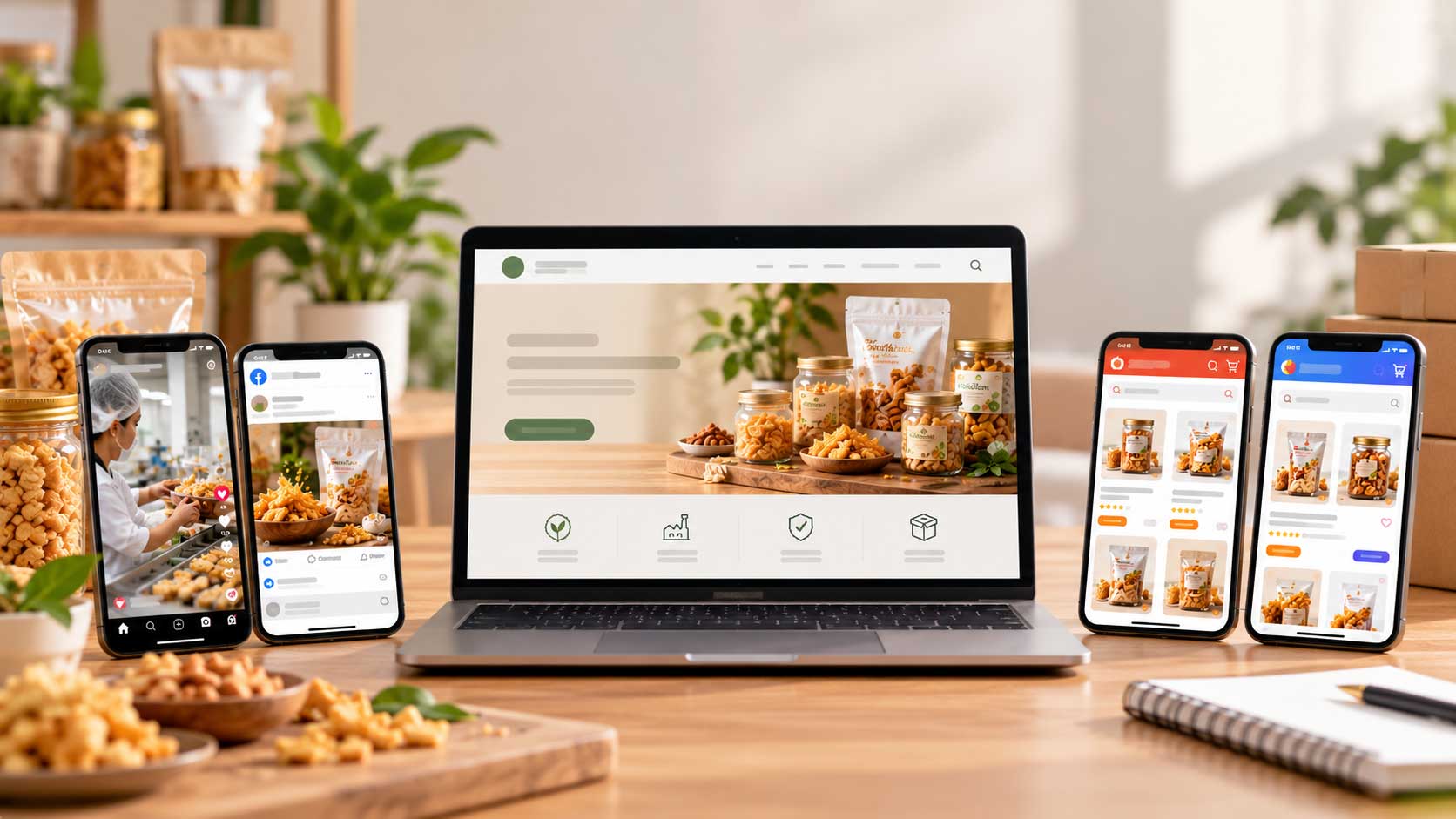
And if your business also uses Facebook, TikTok, Shopee or Lazada, your website does not have to replace those channels. As we explained in our guide on how company websites, social media and marketplaces can work together, each channel can play a different role in your overall online presence.

What Should a Food Manufacturer Put on Its Website?
A food manufacturer website does not need to contain every piece of information your company has. It needs to answer the questions a potential buyer is likely to have before deciding whether to contact you.
For food manufacturers in Malaysia, especially businesses based in Johor or Johor Bahru and serving customers in Singapore, a useful website should make it easy to understand what you manufacture, what your factory can do, what certifications you have, whether you offer OEM or private label services, and how buyers can get in touch.
The simple test is this:
Can a potential buyer understand your company, products and capabilities without having to contact your sales team just to ask basic questions?
If the answer is no, your food manufacturer website content may need to be reviewed.
What Does a Food Manufacturer Website Really Need to Show?
The answer is not simply “more information”.
A good food manufacturer website should show the right information in the right places. A buyer may visit your website because they are looking for a particular product, an OEM partner, a private label manufacturer or a supplier in Malaysia.
Once they arrive, they may immediately want to know:
- What products do you manufacture?
- Can you produce what I need?
- Where is your factory?
- What certifications do you have?
- Do you provide OEM or private label services?
- Who do you normally work with?
- How can I make an enquiry?
Your website should help them find these answers without making them dig through several unrelated pages.
This is especially useful when your business serves customers across Johor, Johor Bahru, Malaysia and Singapore, where buyers may be comparing suppliers from different locations.
1. Can Visitors Understand What Your Company Does?
Before showing detailed product information, your food manufacturer website should make one thing clear:
Who are you and what do you manufacture?
You do not need a long company history to explain what your business does. A concise introduction can cover your manufacturing focus, location, experience, product categories and the types of customers you serve.
For example, a manufacturer based in Johor Bahru may want to clearly state its location and the markets it serves instead of making visitors search for this information on the Contact page.
The goal is simple: when someone lands on your website for the first time, they should be able to understand what your company does within a few seconds.
2. Can Buyers Easily Find Your Products?
A buyer should not have to scroll through a long paragraph to figure out what you manufacture.
Your food manufacturer website content should organise products into clear categories where appropriate.
Depending on your business, this might include:
- Sauces and condiments
- Snacks
- Beverages
- Frozen food
- Ready-to-eat products
- Baking ingredients
- Food ingredients
Individual product pages can then provide more useful information, such as product descriptions, packaging options, sizes, applications and specifications.
The exact information will depend on what you manufacture, but the principle is the same:
Make it easy for buyers to understand your products before they enquire.
3. Can Your Website Show What Your Factory Can Actually Do?
This is where a food manufacturing website should go beyond simply listing products.
A potential buyer may already know what product they want. Their next question could be:
“Can this manufacturer actually produce it according to my requirements?”
Your website can explain relevant manufacturing capabilities, such as:
- Production processes
- Processing methods
- Production capacity, where appropriate
- Packaging capabilities
- Product formats
- Customisation options
- Quality control processes
- OEM support
You do not need to reveal confidential production information.
Instead, give buyers enough information to understand whether your capabilities are relevant to their project.
For example, if your company supports customised packaging or product development, this should be clearly explained rather than left for the sales team to mention later.
4. Does Your Website Show Your Factory and Facilities?
For a manufacturer, real photographs can help visitors understand the business more clearly.
A food manufacturer website can include relevant images of:
- Production areas
- Machinery and equipment
- Packaging lines
- Storage areas
- Quality control areas
- Research and development facilities
These images do not need to show every corner of the factory.
Choose photographs that genuinely represent your business and help potential buyers understand the scale or working environment of your operation.
For manufacturers in Johor, this can also help potential customers understand where the business operates, particularly when serving clients in Johor Bahru, other parts of Malaysia or nearby Singapore.
The important point is to use real business information and real photographs wherever possible rather than presenting generic images as if they were your actual facilities.
5. Are Your Certifications Easy to Find?
For buyers evaluating a food manufacturer, certifications and food safety standards can be important information to review.
Your food manufacturer website content should make relevant certifications easy to find instead of hiding them at the bottom of a page.
Depending on what your company actually holds, this may include information about:
- Halal certification
- HACCP
- GMP
- ISO standards
- Food safety systems
- Other relevant certifications or standards
Only publish certifications that your company actually holds, and keep publicly available documents updated.
You can also provide a short explanation of what each certification means for your manufacturing operation rather than simply displaying a row of logos.
This gives visitors more context and helps them understand the information they are looking at.
6. Do You Offer OEM or Private Label Manufacturing?
If your company provides OEM or private label services, do not make buyers guess.
A potential customer may be looking for a manufacturer because they already have a product concept or brand but do not have their own production facility.
A food manufacturing website can explain what your company actually supports, such as:
- Product development
- Formulation or recipe support
- Custom packaging
- Private label production
- OEM manufacturing
- Product customisation
- Packaging formats
- Minimum order requirements, where appropriate
You can also explain the general enquiry process so buyers know what information they should prepare before contacting you.
This can be especially useful for businesses looking for an OEM food manufacturer in Malaysia or a manufacturing partner serving customers across Johor and Singapore.
7. Can Buyers Get the Product Information They Need?
Not every buyer is ready to contact your sales team immediately.
Some may want to compare products internally first.
This is why useful food manufacturer website content can include downloadable resources such as:
- Product catalogues
- Product specifications
- Brochures
- Packaging information
- Technical information
- Certifications
- Frequently requested documents
If you provide downloads, make sure the information is current.
An old catalogue or outdated certificate can create more questions instead of making the buying process easier.
The purpose of these resources is not to make the website look more complete. It is to help buyers get the information they reasonably need before moving to the next step.
8. Does Your Website Explain Who You Serve?
A potential buyer may also want to know whether your company works with businesses like theirs.
Your food manufacturer website can explain the types of customers or industries you serve, such as:
- Food brands
- Retailers
- Distributors
- Wholesalers
- Restaurants and foodservice businesses
- Other manufacturers
- Export customers
If your company has experience serving particular markets, you can explain this naturally.
For example, a manufacturer in Johor may serve businesses across Malaysia as well as customers connected to Singapore. If that is part of the actual business, the website can explain it clearly.
There is no need to list every possible industry simply for SEO. Focus on the customers your company genuinely serves.
9. Is It Easy for Buyers to Make an Enquiry?
Once a visitor has found the information they need, the next step should be obvious.
Make it easy for them to contact your team through options such as:
- Enquiry form
- Phone
- Office or factory location
- Business hours
For B2B enquiries, the form can also ask for useful information such as:
- Product of interest
- Estimated quantity
- Packaging requirements
- Target market
- OEM or private label requirements
- Project details
This can give your team more useful context when responding.
A website should not make a potential buyer understand everything about your company and then make them search again just to find out how to contact you.
How Should Food Manufacturer Website Content Be Structured?
Having the right information is only part of the job.
The way your food manufacturer website content is organised also affects how easily buyers can understand your business.
You do not necessarily need a complicated site structure.
A simple structure could be:
Homepage
↓
About Us
↓
Products
↓
Manufacturing Capabilities
↓
Factory & Facilities
↓
Certifications
↓
OEM / Private Label
↓
Downloads
↓
Contact / Enquiry
This gives visitors a natural path:
Understand the company → Explore products → Check capabilities → Build confidence → Make an enquiry
If you are still deciding what type of website structure fits your food business, you can also read our guide on choosing a website for the food industry.
A Simple Test: Can Your Website Answer These 8 Questions?
Instead of asking whether your website has enough pages, try looking at it from a buyer’s perspective.
Open your food manufacturer website and ask:
- What does this company manufacture?
- Can I easily find the products I am looking for?
- Can this factory produce what I need?
- Where is the company located?
- What certifications or standards does it have?
- Does it provide OEM or private label manufacturing?
- Can I get the product information I need?
- How do I contact the company?
If a potential customer cannot find several of these answers without contacting your team, that does not necessarily mean your company lacks information.
It may simply mean the food manufacturing website needs better organisation, clearer content or easier navigation.
What About SEO for a Food Manufacturer Website?
SEO should support useful information rather than change the way your website speaks to customers.
For example, a food manufacturer website can naturally create useful pages around products, manufacturing capabilities, OEM services, certifications, industries served and frequently asked questions.
You do not need to repeat the same phrase in every sentence.
Instead, make each page useful for a specific purpose and use relevant wording naturally.
Google’s SEO Starter Guide provides guidance on creating websites that are easier for search engines to understand while still focusing on useful content for visitors.
For businesses in Malaysia, location information can also be useful when it accurately reflects the business. If your company operates in Johor Bahru, serves customers across Johor, or works with businesses in Singapore, state this clearly where relevant.
The important thing is that the information should describe your actual business, not be added simply to insert more location keywords.
Does Every Food Manufacturer Need the Same Website Content?
No.
The right food manufacturer website content depends on the company’s products, customers and business model.
A manufacturer focused mainly on its own products may need to put more attention on product information, manufacturing capabilities and certifications.
An OEM or private label manufacturer may need more detailed information about product development, customisation, packaging and the enquiry process.
A food ingredient supplier may need more technical information, applications, specifications and downloadable documents.
So the goal is not to copy another company’s website.
The goal is to build a food manufacturing website around the questions your own buyers are most likely to ask.
What If Your Website Already Has Most of This Information?
This is where many businesses may find the issue is not the amount of information they have.
You may already have:
- About Us
- Product pages
- Factory photos
- Certification information
- Contact details
But if the information is outdated, difficult to find, poorly organised or spread across too many pages, buyers may still struggle to understand your business.
In that situation, you may not need to start from zero.
A website revamp can involve reviewing existing content, reorganising the information and improving how it is presented, while keeping useful information that your company already has.
Conclusion: Build Your Website Around Your Buyers’ Questions
The best food manufacturer website is not necessarily the one with the most pages.
It is the one that makes it easy for the right buyer to understand:
Who are you?
↓
What do you manufacture?
↓
What can you produce?
↓
What standards do you follow?
↓
Can you support my project?
↓
How can I contact you?
For a food manufacturer in Malaysia, Johor or Johor Bahru, these answers can help potential buyers understand your business before they start a conversation. If you also serve the Singapore market, clearly presenting your location, capabilities and service scope can make the information easier for regional buyers to understand.
Your website does not need to say everything.
It needs to say the right things clearly, in the places where buyers expect to find them.
And if your business also uses Facebook, TikTok, Shopee or Lazada, your website does not have to replace those channels. As we explained in our guide on how company websites, social media and marketplaces can work together, each channel can play a different role in your overall online presence.


