


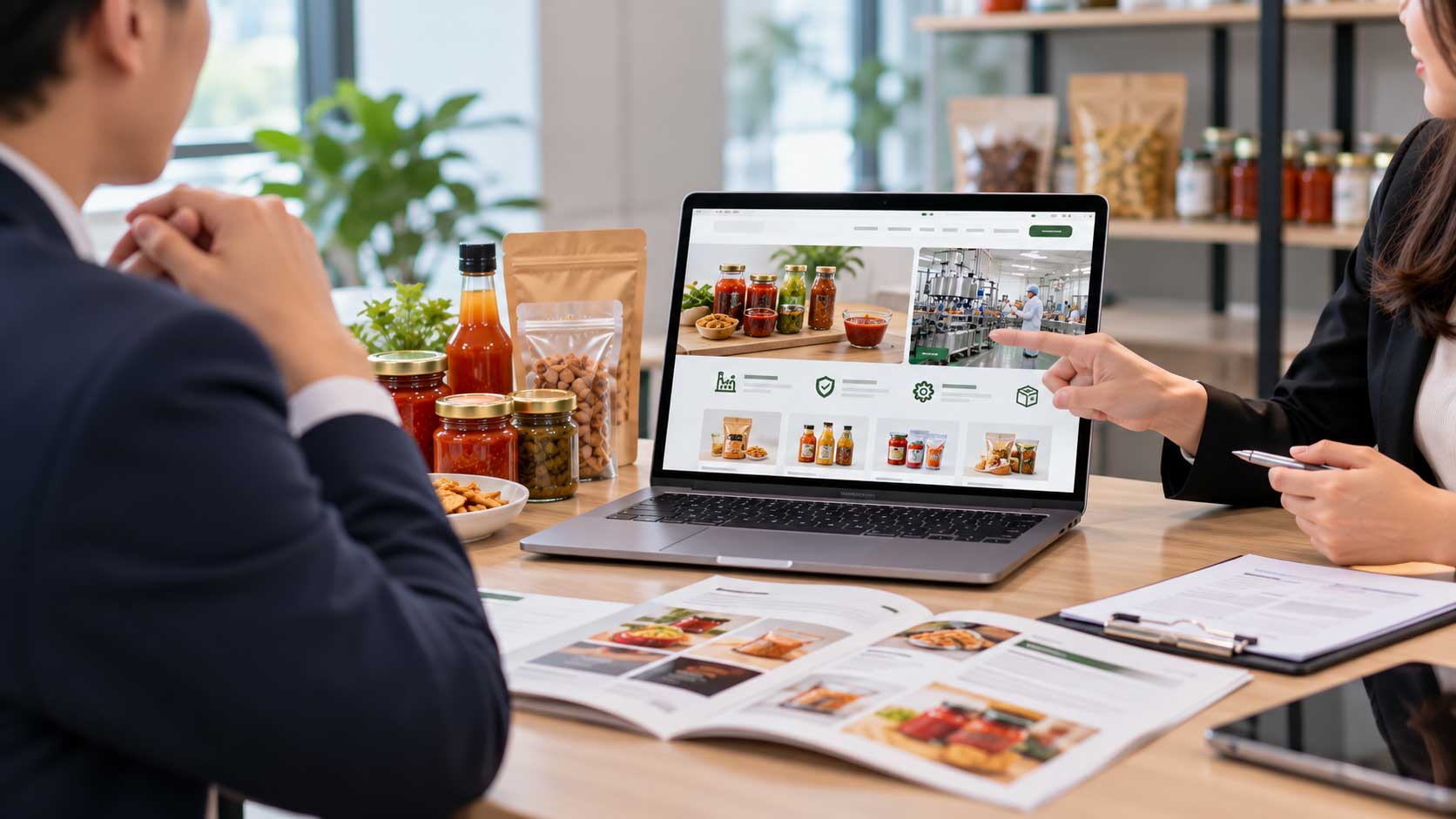
How Food Manufacturers Can Get More B2B Enquiries from Their Website
A food manufacturer website should do more than introduce your company. It should help potential buyers understand what you produce, what your factory can do, and how they can contact you.
For food manufacturers in Malaysia, including businesses in Johor and Johor Bahru that serve customers in Singapore, getting more relevant B2B enquiries starts with providing clear, useful information.
The goal is not simply to receive more messages. It is to help the right buyers understand your business and make it easier for them to enquire.
How Can a Food Manufacturer Website Generate More B2B Enquiries?
Before contacting a supplier, buyers may want to check its products, manufacturing capabilities, packaging options, certifications and OEM services.
If these details are difficult to find, they may leave without making an enquiry.
A useful website answers these questions clearly and gives visitors an easy way to get in touch. Here are seven practical ways to improve your website.
1. Make Your Products Easy to Understand
Start by explaining what your company actually manufactures.
Instead of relying on a general company introduction, organise your products into clear categories. Depending on your business, you can include product types, packaging formats, specifications and relevant photos.
For example, if your factory manufactures sauces, explain which types of sauces you produce and what packaging formats you support.
You do not need to publish every technical detail. Focus on the information buyers need to decide whether your products match their requirements.
Clear product information helps potential customers understand your offerings before they send B2B enquiries.
2. Show What Your Factory Can Do
Buyers may need more than a product list. They may also want to know whether your factory can support their project.
Explain your actual manufacturing processes, machinery, packaging capabilities and OEM or private label services, where applicable.
Use real factory photos and add a short explanation of what each image shows. A photo of a packaging line becomes more useful when buyers understand which packaging formats it supports.
For more ideas, read our guide on how to present your factory and manufacturing capabilities online.
The aim is to help buyers understand whether your manufacturing setup suits their needs, without revealing confidential production information.
3. Make Important Information Easy to Find
A website can contain plenty of information and still be difficult to use.
For example, buyers should not have to open several pages just to find out whether you offer OEM manufacturing or where your factory is located.
Organise your website around the questions customers are likely to ask. Important information may include:
- Products and product specifications
- Manufacturing capabilities
- OEM or private label services
- Relevant certifications
- Factory location and markets served
- Contact details
If you already have these details, you may not need to write more content. You may simply need to organise it better.
Our article on what a food manufacturer should put on its website explains this in more detail.
4. Build Trust with Accurate Information
Before sending an enquiry, buyers may want to know whether your company is a suitable supplier.
Your website can help by providing accurate information about your business, manufacturing capabilities and quality control practices.
Depending on your actual operations, you may include:
- A company introduction and factory location
- Real product and facility photos
- Relevant certifications held by your company
- Quality control information
- The types of customers or projects you serve
Only include claims and certifications your business can verify. If some details cannot be shared publicly, provide the information you can and discuss the rest during the enquiry process.
Keeping your website consistent with what your sales team tells customers is also important. Gartner’s 2025 survey found that 69% of surveyed B2B buyers reported inconsistencies between information on supplier websites and information provided by sales representatives. This highlights the value of keeping website content accurate and up to date.
You can read the Gartner B2B buyer research for more context.
5. Give Buyers a Clear Way to Enquire
Even when buyers are interested, they may not contact you if the next step is unclear.
Make your contact options easy to find. Depending on how your business handles enquiries, you could provide:
- An enquiry form
- A business email address
- A WhatsApp contact option
- A telephone number
For B2B enquiries, a short form can ask for the buyer’s company name, contact details, product requirements and a brief description of the project.
Keep the form simple. Asking for too much information at the first step may discourage people from completing it.
You can also explain what customers can enquire about, such as product supply, OEM manufacturing or customised packaging.
6. Make Your Website Easy to Use on Mobile
Potential customers may visit your website from their phones while researching suppliers or following up on a recommendation.
Check that product information is easy to read, menus are simple to navigate, photos display properly and contact buttons work on smaller screens.
Pay attention to enquiry forms too. If a form is difficult to complete on a phone, it creates unnecessary friction.
A mobile-friendly website cannot guarantee more B2B enquiries, but it makes it easier for visitors to find information and contact your business.
7. Use SEO to Help Relevant Buyers Find You
Even a well-organised website needs a way to reach potential customers.
Search engine optimisation (SEO) can help your website become more relevant to searches related to your products, services and target markets.
For example, a food manufacturer could create useful pages about its product categories, OEM services or specific manufacturing capabilities. The content should reflect what the business genuinely offers and what potential buyers may search for.
Avoid repeating the same keyword throughout every paragraph or creating pages with almost identical information.
Google recommends creating helpful, reliable, people-first content rather than content written mainly to manipulate search rankings. Read its guidance on creating helpful website content.
SEO takes time, and rankings or enquiries are not guaranteed. However, useful content and clear website structure can help visitors find the information they need once they arrive.
How to Check Whether Your Website Is Generating B2B Enquiries
Do not judge your website only by how many messages you receive. Look at both the number and quality of enquiries.
You can start by reviewing:
- Enquiry form submissions: Are visitors completing your forms?
- WhatsApp and email contacts: Are potential buyers using your contact options?
- Enquiry quality: Are people asking about products and services your company actually provides?
- Traffic sources: Are visitors arriving through Google, referrals or other channels?
- Pages visited before an enquiry: Which pages do visitors view before contacting you?
Google Analytics can help you review website activity and tracked enquiry actions. Google Search Console provides information about search visibility and clicks.
For example, if visitors read your OEM page but rarely contact you, check whether your services, requirements and next steps are clear.
If your website receives visitors but few enquiries, review the product information, manufacturing capabilities, contact options and enquiry form before assuming you need a complete redesign.
Sometimes, improving the existing content and layout is enough to make the website easier to use. If the site is outdated or difficult to manage, a website revamp may be worth considering.
Conclusion: Make It Easier for the Right Buyers to Contact You
Getting more B2B enquiries is not just about attracting more website visitors. Your website should help potential customers understand your products, assess your manufacturing capabilities and decide whether to contact your team.
For food manufacturers in Malaysia, a practical starting point is to:
- Present products and services clearly
- Explain what your factory can do
- Provide accurate, useful information
- Make contact options easy to find
- Improve the mobile experience
- Help relevant buyers discover your website
- Review enquiry activity and improve where needed
A website cannot guarantee new enquiries, but it can remove avoidable barriers that stop interested buyers from contacting you.
The goal is simple: help the right buyers understand your business and make it easy for them to start a conversation.
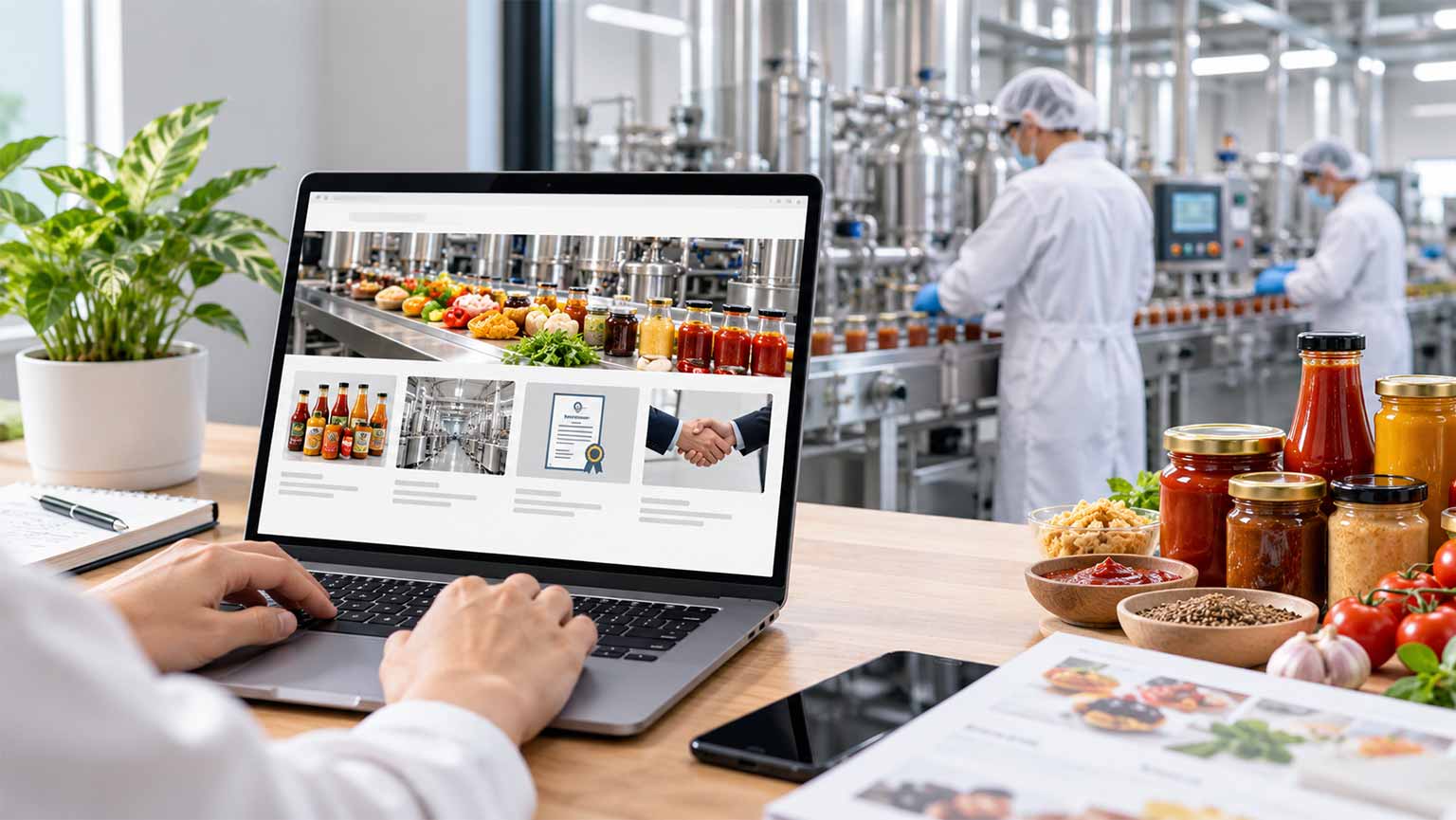

How Food Manufacturers Can Get More B2B Enquiries from Their Website
A food manufacturer website should do more than introduce your company. It should help potential buyers understand what you produce, what your factory can do, and how they can contact you.
For food manufacturers in Malaysia, including businesses in Johor and Johor Bahru that serve customers in Singapore, getting more relevant B2B enquiries starts with providing clear, useful information.
The goal is not simply to receive more messages. It is to help the right buyers understand your business and make it easier for them to enquire.
How Can a Food Manufacturer Website Generate More B2B Enquiries?
Before contacting a supplier, buyers may want to check its products, manufacturing capabilities, packaging options, certifications and OEM services.
If these details are difficult to find, they may leave without making an enquiry.
A useful website answers these questions clearly and gives visitors an easy way to get in touch. Here are seven practical ways to improve your website.
1. Make Your Products Easy to Understand
Start by explaining what your company actually manufactures.
Instead of relying on a general company introduction, organise your products into clear categories. Depending on your business, you can include product types, packaging formats, specifications and relevant photos.
For example, if your factory manufactures sauces, explain which types of sauces you produce and what packaging formats you support.
You do not need to publish every technical detail. Focus on the information buyers need to decide whether your products match their requirements.
Clear product information helps potential customers understand your offerings before they send B2B enquiries.
2. Show What Your Factory Can Do
Buyers may need more than a product list. They may also want to know whether your factory can support their project.
Explain your actual manufacturing processes, machinery, packaging capabilities and OEM or private label services, where applicable.
Use real factory photos and add a short explanation of what each image shows. A photo of a packaging line becomes more useful when buyers understand which packaging formats it supports.
For more ideas, read our guide on how to present your factory and manufacturing capabilities online.
The aim is to help buyers understand whether your manufacturing setup suits their needs, without revealing confidential production information.
3. Make Important Information Easy to Find
A website can contain plenty of information and still be difficult to use.
For example, buyers should not have to open several pages just to find out whether you offer OEM manufacturing or where your factory is located.
Organise your website around the questions customers are likely to ask. Important information may include:
- Products and product specifications
- Manufacturing capabilities
- OEM or private label services
- Relevant certifications
- Factory location and markets served
- Contact details
If you already have these details, you may not need to write more content. You may simply need to organise it better.
Our article on what a food manufacturer should put on its website explains this in more detail.
4. Build Trust with Accurate Information
Before sending an enquiry, buyers may want to know whether your company is a suitable supplier.
Your website can help by providing accurate information about your business, manufacturing capabilities and quality control practices.
Depending on your actual operations, you may include:
- A company introduction and factory location
- Real product and facility photos
- Relevant certifications held by your company
- Quality control information
- The types of customers or projects you serve
Only include claims and certifications your business can verify. If some details cannot be shared publicly, provide the information you can and discuss the rest during the enquiry process.
Keeping your website consistent with what your sales team tells customers is also important. Gartner’s 2025 survey found that 69% of surveyed B2B buyers reported inconsistencies between information on supplier websites and information provided by sales representatives. This highlights the value of keeping website content accurate and up to date.
You can read the Gartner B2B buyer research for more context.
5. Give Buyers a Clear Way to Enquire
Even when buyers are interested, they may not contact you if the next step is unclear.
Make your contact options easy to find. Depending on how your business handles enquiries, you could provide:
- An enquiry form
- A business email address
- A WhatsApp contact option
- A telephone number
For B2B enquiries, a short form can ask for the buyer’s company name, contact details, product requirements and a brief description of the project.
Keep the form simple. Asking for too much information at the first step may discourage people from completing it.
You can also explain what customers can enquire about, such as product supply, OEM manufacturing or customised packaging.
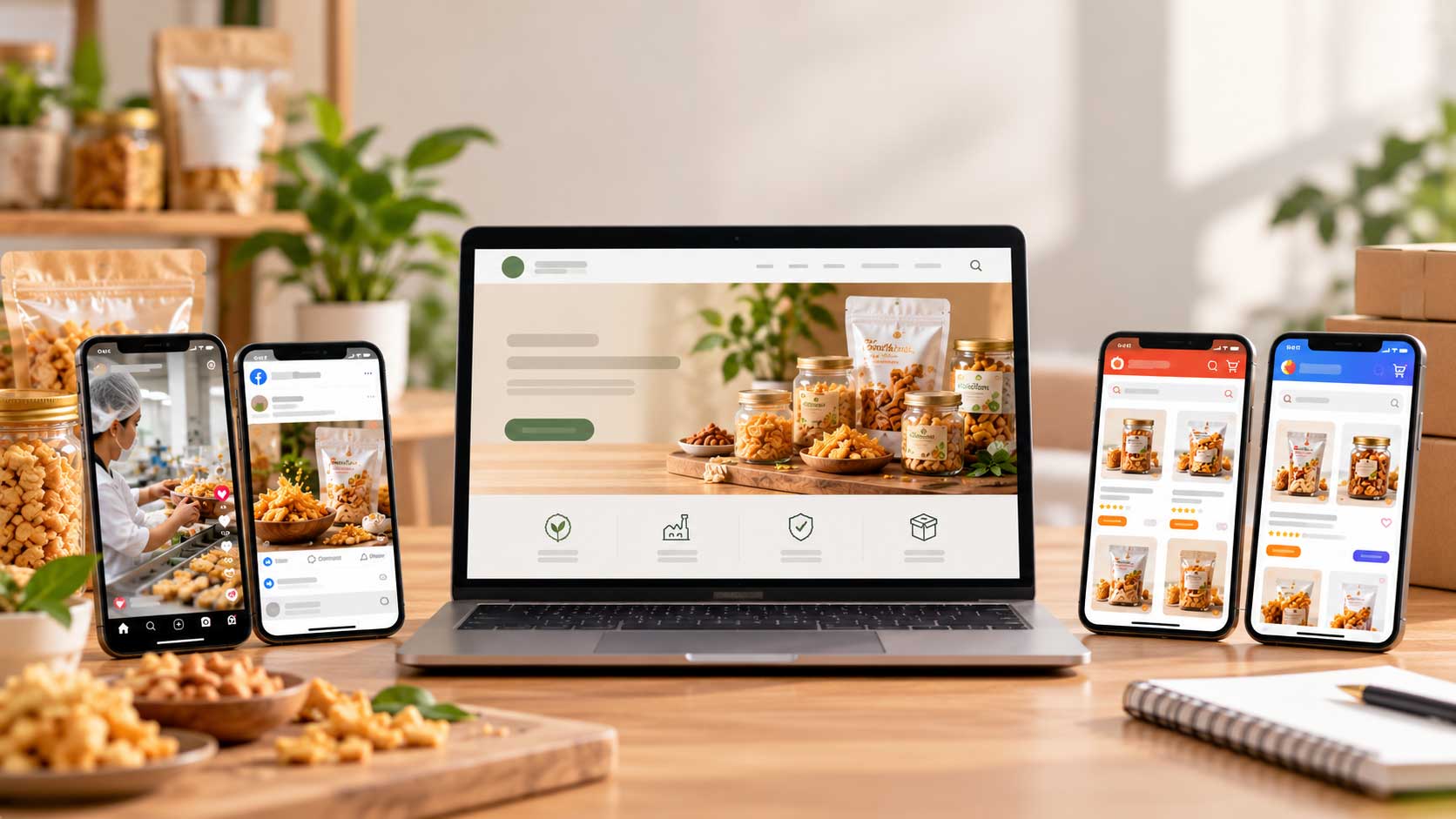
6. Make Your Website Easy to Use on Mobile
Potential customers may visit your website from their phones while researching suppliers or following up on a recommendation.
Check that product information is easy to read, menus are simple to navigate, photos display properly and contact buttons work on smaller screens.
Pay attention to enquiry forms too. If a form is difficult to complete on a phone, it creates unnecessary friction.
A mobile-friendly website cannot guarantee more B2B enquiries, but it makes it easier for visitors to find information and contact your business.
7. Use SEO to Help Relevant Buyers Find You
Even a well-organised website needs a way to reach potential customers.
Search engine optimisation (SEO) can help your website become more relevant to searches related to your products, services and target markets.
For example, a food manufacturer could create useful pages about its product categories, OEM services or specific manufacturing capabilities. The content should reflect what the business genuinely offers and what potential buyers may search for.
Avoid repeating the same keyword throughout every paragraph or creating pages with almost identical information.
Google recommends creating helpful, reliable, people-first content rather than content written mainly to manipulate search rankings. Read its guidance on creating helpful website content.
SEO takes time, and rankings or enquiries are not guaranteed. However, useful content and clear website structure can help visitors find the information they need once they arrive.
How to Check Whether Your Website Is Generating B2B Enquiries
Do not judge your website only by how many messages you receive. Look at both the number and quality of enquiries.
You can start by reviewing:
- Enquiry form submissions: Are visitors completing your forms?
- WhatsApp and email contacts: Are potential buyers using your contact options?
- Enquiry quality: Are people asking about products and services your company actually provides?
- Traffic sources: Are visitors arriving through Google, referrals or other channels?
- Pages visited before an enquiry: Which pages do visitors view before contacting you?
Google Analytics can help you review website activity and tracked enquiry actions. Google Search Console provides information about search visibility and clicks.
For example, if visitors read your OEM page but rarely contact you, check whether your services, requirements and next steps are clear.
If your website receives visitors but few enquiries, review the product information, manufacturing capabilities, contact options and enquiry form before assuming you need a complete redesign.
Sometimes, improving the existing content and layout is enough to make the website easier to use. If the site is outdated or difficult to manage, a website revamp may be worth considering.
Conclusion: Make It Easier for the Right Buyers to Contact You
Getting more B2B enquiries is not just about attracting more website visitors. Your website should help potential customers understand your products, assess your manufacturing capabilities and decide whether to contact your team.
For food manufacturers in Malaysia, a practical starting point is to:
- Present products and services clearly
- Explain what your factory can do
- Provide accurate, useful information
- Make contact options easy to find
- Improve the mobile experience
- Help relevant buyers discover your website
- Review enquiry activity and improve where needed
A website cannot guarantee new enquiries, but it can remove avoidable barriers that stop interested buyers from contacting you.
The goal is simple: help the right buyers understand your business and make it easy for them to start a conversation.


