



How to Build a Website That Attracts Singapore B2B Clients
Quick Answer
A Singapore B2B Clients Website doesn’t need flashy design tricks — it needs to answer the specific questions a Singaporean procurement team or business owner asks before deciding whether to even send an enquiry. Malaysia and Singapore remain each other’s second-largest trading partners, with bilateral trade reaching roughly USD78.70 billion between January and October 2025 alone, accounting for 13.5% of Malaysia’s total trade. That’s not a small, occasional relationship — it’s a deeply active, ongoing one, and a lot of it starts with one business finding another online.
Understanding how to build a website that attracts Singapore B2B clients comes down to a few consistent priorities: clarity about what you actually do, visible proof you’re credible and established, and a website that doesn’t make a cross-border buyer work hard to trust you.
Singapore B2B Clients Website: 5 Proven Ways to Improve Your Site
If you only read one section, make it this one:
- Lead with specifics, not vague claims.
“We provide quality solutions” tells a Singaporean buyer nothing useful. Naming exact services, industries served, and capacity gives them something concrete to evaluate. - Make your credentials visible, not buried.
Certifications, years in operation, and client industries served all matter more to a first-time cross-border enquiry than they might to a local walk-in customer. - Show real work, not generic stock imagery.
Actual photos of your facility, team, or completed projects build far more trust than polished but generic visuals that could belong to any company. - Keep contact and response expectations clear.
A Singaporean buyer weighing multiple Malaysian suppliers is more likely to reach out to the one that makes next steps obvious. - Make sure your site performs well on mobile.
Many procurement decision-makers do their initial research on their phones, and a clunky mobile experience can quietly rule you out before a proper look even happens.
B2B Website Malaysia: What Singapore Buyers Actually Check
A generic B2B website Malaysia companies sometimes build tends to focus heavily on describing the business in broad terms, without addressing what a cross-border buyer specifically needs to know before making contact.
In practice, a Singaporean procurement team evaluating a Malaysian supplier or service provider is usually checking a fairly consistent list: what exactly you offer, whether you’ve worked with companies of a similar size or industry before, how established the business is, and whether there’s enough information to shortlist you without needing a phone call just to understand the basics. This mirrors what we’ve already covered in how industrial companies in Malaysia use websites to generate B2B leads — the businesses that convert cross-border interest into real enquiries are usually the ones that answer these questions clearly on the site itself, rather than expecting a buyer to ask.
How to Build a Website That Attracts Singapore B2B Clients
Getting specific about how to build a website that attracts Singapore B2B clients usually starts with putting yourself in the buyer’s position. They’re not just comparing your services — they’re weighing the risk of working with a supplier or partner they haven’t met before, often in a different country’s regulatory and business environment.
This is similar to the trust-building challenge covered in how Malaysian manufacturers use their websites to win overseas clients — credibility signals do a lot of heavy lifting when a buyer can’t simply visit your premises before deciding to engage. A well-built professional website that clearly states your capacity, experience, and past work gives a Singaporean buyer enough confidence to take the next step, rather than defaulting to a supplier that’s easier to verify simply because they’re more visible online.
None of this requires an entirely new website built from scratch. Often it’s a matter of restructuring what already exists — moving credentials and proof of experience higher up the page, being more specific about services, and making sure the overall presentation matches the level of professionalism a cross-border buyer expects before making contact.
Final Thoughts
With trade between Malaysia and Singapore running deep and active, the opportunity for Malaysian businesses to win Singaporean B2B clients isn’t hypothetical — it’s already happening at scale. A Singapore B2B Clients Website built around clarity, visible credibility, and genuine proof of capability is often the deciding factor in whether that opportunity turns into an actual enquiry, or gets passed over for a competitor whose website simply made the decision easier.
If your current site isn’t doing this job well, it may be worth revisiting with a professional website development approach built specifically around how cross-border B2B buyers evaluate suppliers before making contact.


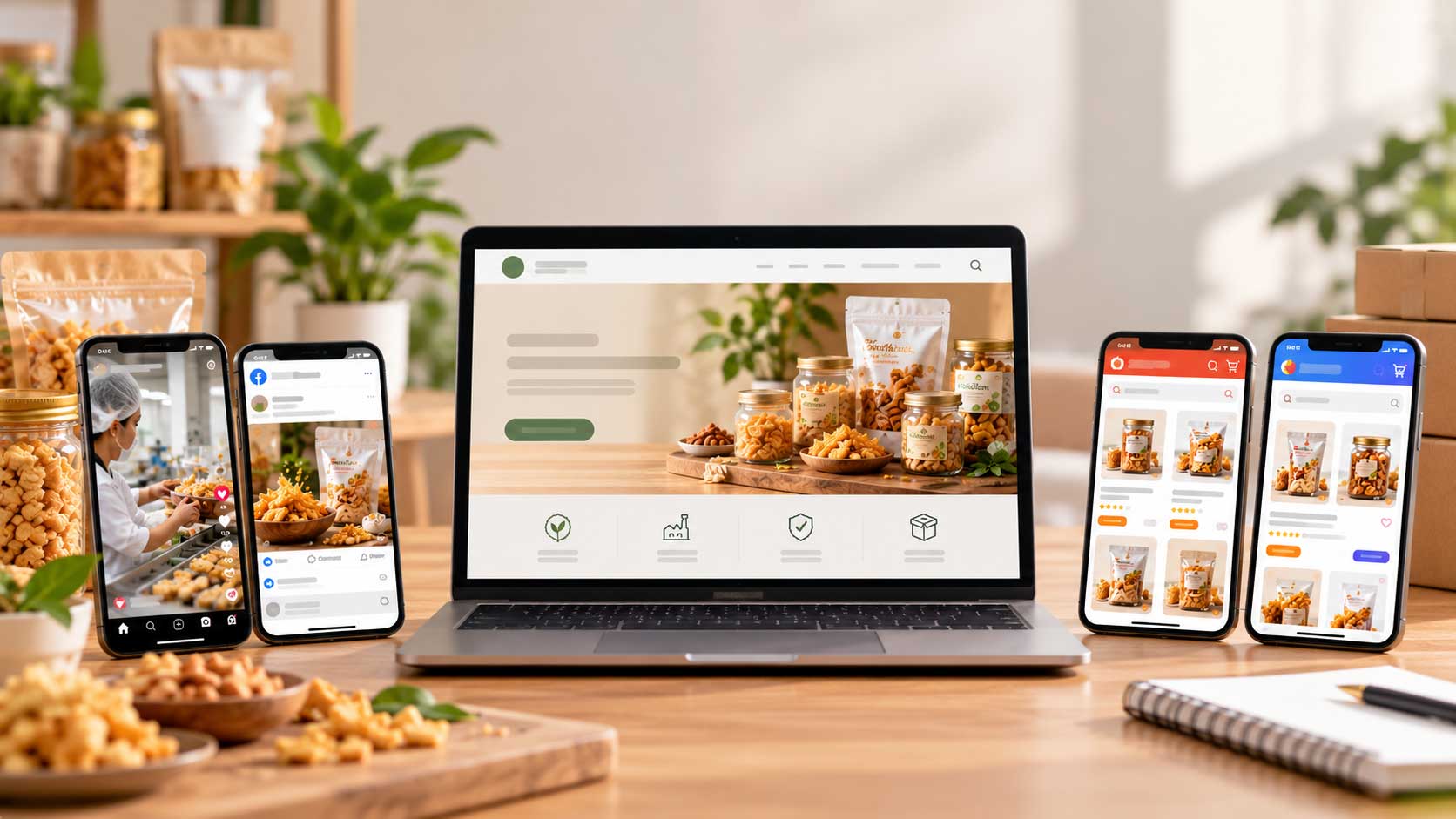

How to Build a Website That Attracts Singapore B2B Clients
Quick Answer
A Singapore B2B Clients Website doesn’t need flashy design tricks — it needs to answer the specific questions a Singaporean procurement team or business owner asks before deciding whether to even send an enquiry. Malaysia and Singapore remain each other’s second-largest trading partners, with bilateral trade reaching roughly USD78.70 billion between January and October 2025 alone, accounting for 13.5% of Malaysia’s total trade. That’s not a small, occasional relationship — it’s a deeply active, ongoing one, and a lot of it starts with one business finding another online.
Understanding how to build a website that attracts Singapore B2B clients comes down to a few consistent priorities: clarity about what you actually do, visible proof you’re credible and established, and a website that doesn’t make a cross-border buyer work hard to trust you.
Singapore B2B Clients Website: 5 Proven Ways to Improve Your Site
If you only read one section, make it this one:
- Lead with specifics, not vague claims.
“We provide quality solutions” tells a Singaporean buyer nothing useful. Naming exact services, industries served, and capacity gives them something concrete to evaluate. - Make your credentials visible, not buried.
Certifications, years in operation, and client industries served all matter more to a first-time cross-border enquiry than they might to a local walk-in customer. - Show real work, not generic stock imagery.
Actual photos of your facility, team, or completed projects build far more trust than polished but generic visuals that could belong to any company. - Keep contact and response expectations clear.
A Singaporean buyer weighing multiple Malaysian suppliers is more likely to reach out to the one that makes next steps obvious. - Make sure your site performs well on mobile.
Many procurement decision-makers do their initial research on their phones, and a clunky mobile experience can quietly rule you out before a proper look even happens.
B2B Website Malaysia: What Singapore Buyers Actually Check
A generic B2B website Malaysia companies sometimes build tends to focus heavily on describing the business in broad terms, without addressing what a cross-border buyer specifically needs to know before making contact.
In practice, a Singaporean procurement team evaluating a Malaysian supplier or service provider is usually checking a fairly consistent list: what exactly you offer, whether you’ve worked with companies of a similar size or industry before, how established the business is, and whether there’s enough information to shortlist you without needing a phone call just to understand the basics. This mirrors what we’ve already covered in how industrial companies in Malaysia use websites to generate B2B leads — the businesses that convert cross-border interest into real enquiries are usually the ones that answer these questions clearly on the site itself, rather than expecting a buyer to ask.
How to Build a Website That Attracts Singapore B2B Clients
Getting specific about how to build a website that attracts Singapore B2B clients usually starts with putting yourself in the buyer’s position. They’re not just comparing your services — they’re weighing the risk of working with a supplier or partner they haven’t met before, often in a different country’s regulatory and business environment.
This is similar to the trust-building challenge covered in how Malaysian manufacturers use their websites to win overseas clients — credibility signals do a lot of heavy lifting when a buyer can’t simply visit your premises before deciding to engage. A well-built professional website that clearly states your capacity, experience, and past work gives a Singaporean buyer enough confidence to take the next step, rather than defaulting to a supplier that’s easier to verify simply because they’re more visible online.
None of this requires an entirely new website built from scratch. Often it’s a matter of restructuring what already exists — moving credentials and proof of experience higher up the page, being more specific about services, and making sure the overall presentation matches the level of professionalism a cross-border buyer expects before making contact.
Final Thoughts
With trade between Malaysia and Singapore running deep and active, the opportunity for Malaysian businesses to win Singaporean B2B clients isn’t hypothetical — it’s already happening at scale. A Singapore B2B Clients Website built around clarity, visible credibility, and genuine proof of capability is often the deciding factor in whether that opportunity turns into an actual enquiry, or gets passed over for a competitor whose website simply made the decision easier.
If your current site isn’t doing this job well, it may be worth revisiting with a professional website development approach built specifically around how cross-border B2B buyers evaluate suppliers before making contact.


