


Website Loading Speed: 5 Essential Facts to Boost Sales
If your website takes more than 3 seconds to load, you’re likely losing sales before a visitor even sees your homepage. Website Loading Speed isn’t just a technical detail your developer worries about — it directly affects how many visitors stay on your site, how much Google trusts your page, and ultimately how many of those visitors turn into paying customers. We’ve seen this play out repeatedly with Malaysian business sites: the moment loading time drops, bounce rates drop with it and inquiries start picking up.
That’s the short version. Here are 5 essential facts about Website Loading Speed that every Malaysian business owner should understand — and what’s actually worth fixing first.
1. Website Loading Speed has a direct, measurable link to sales
The connection between speed and revenue isn’t guesswork. Visitors form an impression of a website within the first few seconds, and if a page takes too long to appear, most people simply leave before they’ve seen anything you offer. That’s a lost inquiry, a lost sale, and money spent on ads or SEO to bring that visitor to your site in the first place — wasted the moment the page fails to load fast enough to keep them there.
2. Page speed and Core Web Vitals: what Google is actually measuring
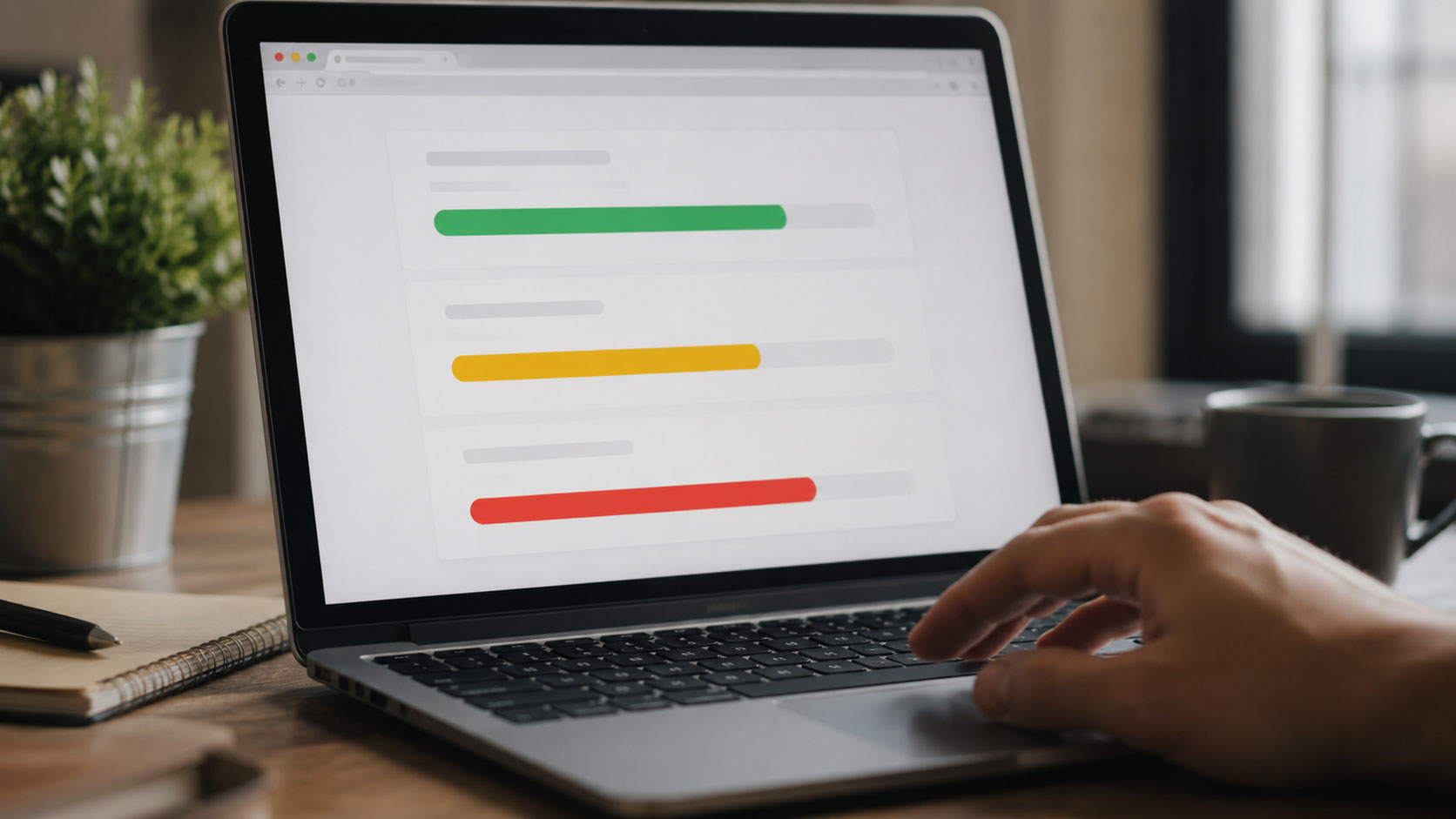
This is the part that confuses most business owners, so let’s keep it simple. Page speed refers to how quickly your website loads and becomes usable. Core Web Vitals is Google’s specific set of metrics for measuring that experience — covering how fast the main content appears, how quickly the page responds to a click or tap, and how much the layout shifts around while it’s loading (that annoying moment where you go to click a button and the page jumps, so you tap the wrong thing instead). Google uses these metrics as a ranking factor, which means a slow site doesn’t just lose visitors directly — it can also rank lower in search results, which quietly shrinks the number of people who ever find your site at all.
3. Site speed optimization and page load time: where the real fixes happen
Site speed optimization usually comes down to a handful of recurring culprits rather than some mysterious, unfixable problem. Oversized, uncompressed images are one of the most common causes of a slow page load time — a single unoptimized photo can add several seconds on its own. Bloated plugins, especially on WordPress sites carrying years of accumulated add-ons, are another frequent cause. Cheap or overcrowded hosting, where your site shares limited server resources with hundreds of others, can also quietly drag load times down no matter how clean your code is. Fixing page load time is rarely about a single dramatic change — it’s usually a handful of specific, fixable issues stacked on top of each other.
4. A fast website builds trust before a customer ever contacts you
Speed sends a signal before a single word on your page gets read. A site that loads instantly feels professional and reliable; a site that stalls and stutters makes a visitor wonder, even subconsciously, whether the business behind it is equally slow to respond, deliver, or follow through. For service-based businesses especially — where trust has to be established before someone picks up the phone or fills out a form — that first impression matters more than most business owners realize.
5. Mobile speed matters even more than desktop
Most Malaysian visitors are browsing on their phones, often on mobile data rather than home WiFi, which makes mobile-first performance a bigger factor than desktop speed for most local businesses. A site that loads reasonably fast on a laptop over office broadband can still feel painfully slow on a phone with a weaker connection. Testing your site specifically on mobile — not just assuming desktop performance carries over — is one of the most overlooked steps in this whole process.
How to actually check your website’s speed
You don’t need to guess whether your site has a problem. Google’s own PageSpeed Insights tool lets you paste in your URL and see your Core Web Vitals scores directly, along with specific recommendations for what’s slowing your page down.
What this means for your website right now
Website Loading Speed isn’t a one-time fix you handle and forget — it’s something worth checking every few months, especially after adding new images, plugins, or features to your site. If your website hasn’t been checked recently, it’s worth finding out where it currently stands before assuming the slow load times are just something customers put up with.
Not sure how fast your website actually loads, or what’s causing the slowdown? Our team at JPress handles website maintenance and technical SEO for businesses across Malaysia — get in touch and we’ll take a look at what’s slowing your site down.




Website Loading Speed: 5 Essential Facts to Boost Sales
If your website takes more than 3 seconds to load, you’re likely losing sales before a visitor even sees your homepage. Website Loading Speed isn’t just a technical detail your developer worries about — it directly affects how many visitors stay on your site, how much Google trusts your page, and ultimately how many of those visitors turn into paying customers. We’ve seen this play out repeatedly with Malaysian business sites: the moment loading time drops, bounce rates drop with it and inquiries start picking up.
That’s the short version. Here are 5 essential facts about Website Loading Speed that every Malaysian business owner should understand — and what’s actually worth fixing first.
1. Website Loading Speed has a direct, measurable link to sales
The connection between speed and revenue isn’t guesswork. Visitors form an impression of a website within the first few seconds, and if a page takes too long to appear, most people simply leave before they’ve seen anything you offer. That’s a lost inquiry, a lost sale, and money spent on ads or SEO to bring that visitor to your site in the first place — wasted the moment the page fails to load fast enough to keep them there.
2. Page speed and Core Web Vitals: what Google is actually measuring
This is the part that confuses most business owners, so let’s keep it simple. Page speed refers to how quickly your website loads and becomes usable. Core Web Vitals is Google’s specific set of metrics for measuring that experience — covering how fast the main content appears, how quickly the page responds to a click or tap, and how much the layout shifts around while it’s loading (that annoying moment where you go to click a button and the page jumps, so you tap the wrong thing instead). Google uses these metrics as a ranking factor, which means a slow site doesn’t just lose visitors directly — it can also rank lower in search results, which quietly shrinks the number of people who ever find your site at all.
3. Site speed optimization and page load time: where the real fixes happen
Site speed optimization usually comes down to a handful of recurring culprits rather than some mysterious, unfixable problem. Oversized, uncompressed images are one of the most common causes of a slow page load time — a single unoptimized photo can add several seconds on its own. Bloated plugins, especially on WordPress sites carrying years of accumulated add-ons, are another frequent cause. Cheap or overcrowded hosting, where your site shares limited server resources with hundreds of others, can also quietly drag load times down no matter how clean your code is. Fixing page load time is rarely about a single dramatic change — it’s usually a handful of specific, fixable issues stacked on top of each other.
4. A fast website builds trust before a customer ever contacts you
Speed sends a signal before a single word on your page gets read. A site that loads instantly feels professional and reliable; a site that stalls and stutters makes a visitor wonder, even subconsciously, whether the business behind it is equally slow to respond, deliver, or follow through. For service-based businesses especially — where trust has to be established before someone picks up the phone or fills out a form — that first impression matters more than most business owners realize.
5. Mobile speed matters even more than desktop
Most Malaysian visitors are browsing on their phones, often on mobile data rather than home WiFi, which makes mobile-first performance a bigger factor than desktop speed for most local businesses. A site that loads reasonably fast on a laptop over office broadband can still feel painfully slow on a phone with a weaker connection. Testing your site specifically on mobile — not just assuming desktop performance carries over — is one of the most overlooked steps in this whole process.
How to actually check your website’s speed
You don’t need to guess whether your site has a problem. Google’s own PageSpeed Insights tool lets you paste in your URL and see your Core Web Vitals scores directly, along with specific recommendations for what’s slowing your page down.
What this means for your website right now
Website Loading Speed isn’t a one-time fix you handle and forget — it’s something worth checking every few months, especially after adding new images, plugins, or features to your site. If your website hasn’t been checked recently, it’s worth finding out where it currently stands before assuming the slow load times are just something customers put up with.
Not sure how fast your website actually loads, or what’s causing the slowdown? Our team at JPress handles website maintenance and technical SEO for businesses across Malaysia — get in touch and we’ll take a look at what’s slowing your site down.


