



How Logistics Companies in Malaysia Use Websites to Get Freight Enquiries
Quick Answer
A strong Logistics Website Malaysia freight and cargo companies actually rely on isn’t just a digital brochure — it’s often the first thing a potential client checks before ever picking up the phone. Understanding how logistics companies in Malaysia get freight enquiries usually comes down to a handful of practical factors: clear service coverage, visible credentials, easy-to-find contact options, and a website that loads quickly and works properly on mobile.
With Malaysia’s freight and logistics market valued at around USD 31.23 billion in 2026 and projected to keep growing steadily through 2031, competition for freight enquiries isn’t slowing down. Companies that make it easy for potential clients to find, evaluate, and contact them online are simply better positioned to capture their share of that growth.
5 Proven Ways to Improve Freight Enquiries
If you only read one section, make it this one:
- List your service coverage clearly.
Whether you handle sea freight, air freight, land transport, or warehousing, potential clients want to quickly confirm you cover the routes and services they need. - Make contact genuinely easy.
A buried contact form or a phone number that’s hard to find costs you enquiries — clickable phone numbers and WhatsApp links reduce friction significantly. - Show real credentials and certifications.
Freight is a trust-heavy industry; licences, industry memberships, and years of operation reassure buyers who’ve never worked with you before. - Keep your site fast and mobile-friendly.
Many procurement staff and business owners check suppliers on their phones between meetings — a slow or clunky mobile experience quietly costs enquiries. - Make past experience visible.
Case studies, client industries served, or even a simple list of cargo types handled helps a new enquiry feel like a safer bet.
How Logistics Companies in Malaysia Get Freight Enquiries
How logistics companies in Malaysia get freight enquiries today looks quite different from a decade ago. Referrals and existing relationships still matter, but a growing share of new enquiries — especially from businesses a company hasn’t worked with before — start with an online search rather than a personal introduction.
This mirrors a pattern we’ve already covered in how industrial companies in Malaysia use websites to generate B2B leads: procurement teams and business owners increasingly want to verify a supplier’s legitimacy and capabilities before ever making contact. For logistics specifically, that often means checking whether a company handles the right freight type, serves the right ports or regions, and has a track record that inspires confidence.
Freight Enquiries Malaysia: What Buyers Actually Look For
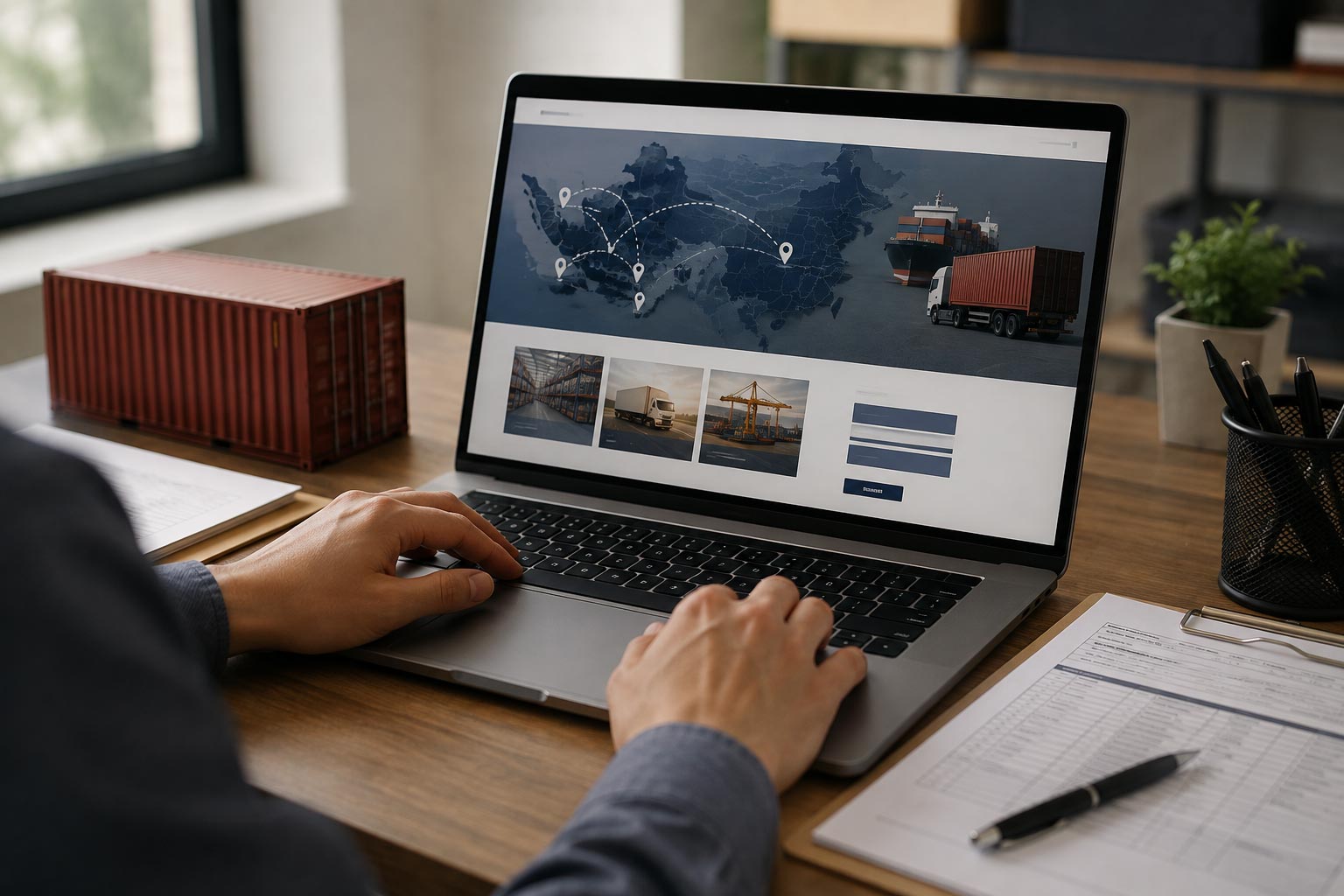
When it comes to freight enquiries Malaysia businesses actually send, a few things consistently matter to the person on the other end:
- Specificity over generic claims.
“We handle logistics” tells a buyer little. Listing specific services — FCL/LCL shipping, customs clearance, last-mile delivery, cold chain handling — helps the right enquiries reach you and filters out mismatched ones. - Proof of reliability.
Freight delays are costly, so buyers look for signals that a company runs a tight operation, whether that’s through client testimonials, partnerships, or clearly stated service guarantees. - A frictionless way to ask a question.
Many freight enquiries start as a simple question — “do you handle shipments to this port” — rather than a full quotation request. A visible, easy contact option captures these early-stage enquiries before a buyer moves on to a competitor.
Businesses serious about capturing more freight enquiries Malaysia wide often find that the biggest wins come from removing friction, not from adding more content. A potential client who has to dig through several pages to find a phone number or service list is a potential client who may simply try the next search result instead.
Building a Logistics Website Malaysia Clients Actually Trust
Trust plays an outsized role in freight and logistics, since clients are often handing over goods worth significant value to a company they may never have worked with before. This is similar to what we’ve seen with Malaysian manufacturers using their websites to win overseas clients — credibility signals matter just as much as service listings.
A solid Logistics Website Malaysia freight companies can rely on typically includes:
- A clear breakdown of services and coverage areas
- Visible licences, certifications, or industry affiliations
- Real photos of operations, fleet, or warehouse facilities rather than generic stock imagery
- Multiple easy contact options, including WhatsApp for quick questions
- Fast loading speed, since slow sites quietly discourage enquiries before a visitor even reads the content
This is largely the same underlying principle covered in why industrial companies in Malaysia still need a website — in B2B sectors where trust and specificity matter more than flashy design, a clear, functional, well-maintained website consistently outperforms one that simply looks impressive. If your current site isn’t doing this job well, it’s often worth revisiting with a professional website development approach built around how freight and logistics clients actually evaluate suppliers.
Final Thoughts
As Malaysia’s freight and logistics market — valued at around USD 31.23 billion in 2026 according to Mordor Intelligence — continues to grow, so does the competition for new clients. A well-built Logistics Website Malaysia companies can count on isn’t a luxury; it’s often the deciding factor in whether freight enquiries Malaysia buyers send end up reaching your business or a competitor’s instead.

How Logistics Companies in Malaysia Use Websites to Get Freight Enquiries
Quick Answer
A strong Logistics Website Malaysia freight and cargo companies actually rely on isn’t just a digital brochure — it’s often the first thing a potential client checks before ever picking up the phone. Understanding how logistics companies in Malaysia get freight enquiries usually comes down to a handful of practical factors: clear service coverage, visible credentials, easy-to-find contact options, and a website that loads quickly and works properly on mobile.
With Malaysia’s freight and logistics market valued at around USD 31.23 billion in 2026 and projected to keep growing steadily through 2031, competition for freight enquiries isn’t slowing down. Companies that make it easy for potential clients to find, evaluate, and contact them online are simply better positioned to capture their share of that growth.
5 Proven Ways to Improve Freight Enquiries
If you only read one section, make it this one:
- List your service coverage clearly.
Whether you handle sea freight, air freight, land transport, or warehousing, potential clients want to quickly confirm you cover the routes and services they need. - Make contact genuinely easy.
A buried contact form or a phone number that’s hard to find costs you enquiries — clickable phone numbers and WhatsApp links reduce friction significantly. - Show real credentials and certifications.
Freight is a trust-heavy industry; licences, industry memberships, and years of operation reassure buyers who’ve never worked with you before. - Keep your site fast and mobile-friendly.
Many procurement staff and business owners check suppliers on their phones between meetings — a slow or clunky mobile experience quietly costs enquiries. - Make past experience visible.
Case studies, client industries served, or even a simple list of cargo types handled helps a new enquiry feel like a safer bet.
How Logistics Companies in Malaysia Get Freight Enquiries
How logistics companies in Malaysia get freight enquiries today looks quite different from a decade ago. Referrals and existing relationships still matter, but a growing share of new enquiries — especially from businesses a company hasn’t worked with before — start with an online search rather than a personal introduction.
This mirrors a pattern we’ve already covered in how industrial companies in Malaysia use websites to generate B2B leads: procurement teams and business owners increasingly want to verify a supplier’s legitimacy and capabilities before ever making contact. For logistics specifically, that often means checking whether a company handles the right freight type, serves the right ports or regions, and has a track record that inspires confidence.
Freight Enquiries Malaysia: What Buyers Actually Look For
When it comes to freight enquiries Malaysia businesses actually send, a few things consistently matter to the person on the other end:
- Specificity over generic claims.
“We handle logistics” tells a buyer little. Listing specific services — FCL/LCL shipping, customs clearance, last-mile delivery, cold chain handling — helps the right enquiries reach you and filters out mismatched ones. - Proof of reliability.
Freight delays are costly, so buyers look for signals that a company runs a tight operation, whether that’s through client testimonials, partnerships, or clearly stated service guarantees. - A frictionless way to ask a question.
Many freight enquiries start as a simple question — “do you handle shipments to this port” — rather than a full quotation request. A visible, easy contact option captures these early-stage enquiries before a buyer moves on to a competitor.
Businesses serious about capturing more freight enquiries Malaysia wide often find that the biggest wins come from removing friction, not from adding more content. A potential client who has to dig through several pages to find a phone number or service list is a potential client who may simply try the next search result instead.
Building a Logistics Website Malaysia Clients Actually Trust
Trust plays an outsized role in freight and logistics, since clients are often handing over goods worth significant value to a company they may never have worked with before. This is similar to what we’ve seen with Malaysian manufacturers using their websites to win overseas clients — credibility signals matter just as much as service listings.
A solid Logistics Website Malaysia freight companies can rely on typically includes:
- A clear breakdown of services and coverage areas
- Visible licences, certifications, or industry affiliations
- Real photos of operations, fleet, or warehouse facilities rather than generic stock imagery
- Multiple easy contact options, including WhatsApp for quick questions
- Fast loading speed, since slow sites quietly discourage enquiries before a visitor even reads the content
This is largely the same underlying principle covered in why industrial companies in Malaysia still need a website — in B2B sectors where trust and specificity matter more than flashy design, a clear, functional, well-maintained website consistently outperforms one that simply looks impressive. If your current site isn’t doing this job well, it’s often worth revisiting with a professional website development approach built around how freight and logistics clients actually evaluate suppliers.
Final Thoughts
As Malaysia’s freight and logistics market — valued at around USD 31.23 billion in 2026 according to Mordor Intelligence — continues to grow, so does the competition for new clients. A well-built Logistics Website Malaysia companies can count on isn’t a luxury; it’s often the deciding factor in whether freight enquiries Malaysia buyers send end up reaching your business or a competitor’s instead.


