


How to Present Your Factory and Manufacturing Capabilities Online
A food manufacturer does not need to show every machine, room or production detail on its website.
What matters is whether a potential buyer can quickly understand what your factory can actually do.
For food manufacturers in Malaysia, especially businesses based in Johor and Johor Bahru that also serve customers in Singapore, your website should do more than display a few factory photos.
It should help buyers understand your food manufacturing capabilities, production processes, packaging options and quality control.
The goal is simple:
Don’t just show your factory. Show buyers what your factory can do.
How to Showcase Food Manufacturing Capabilities Online
A factory photo can show that you have a production facility, but it does not necessarily explain what you can manufacture.
When presenting your food manufacturing capabilities, think about the questions a potential buyer may have:
- What products do you manufacture?
- What production processes do you support?
- What packaging can you handle?
- Do you provide OEM or private label manufacturing?
- What quality control practices do you follow?
- Where is your factory located?
Your website should make these answers easy to find.
1. Show What Products You Manufacture
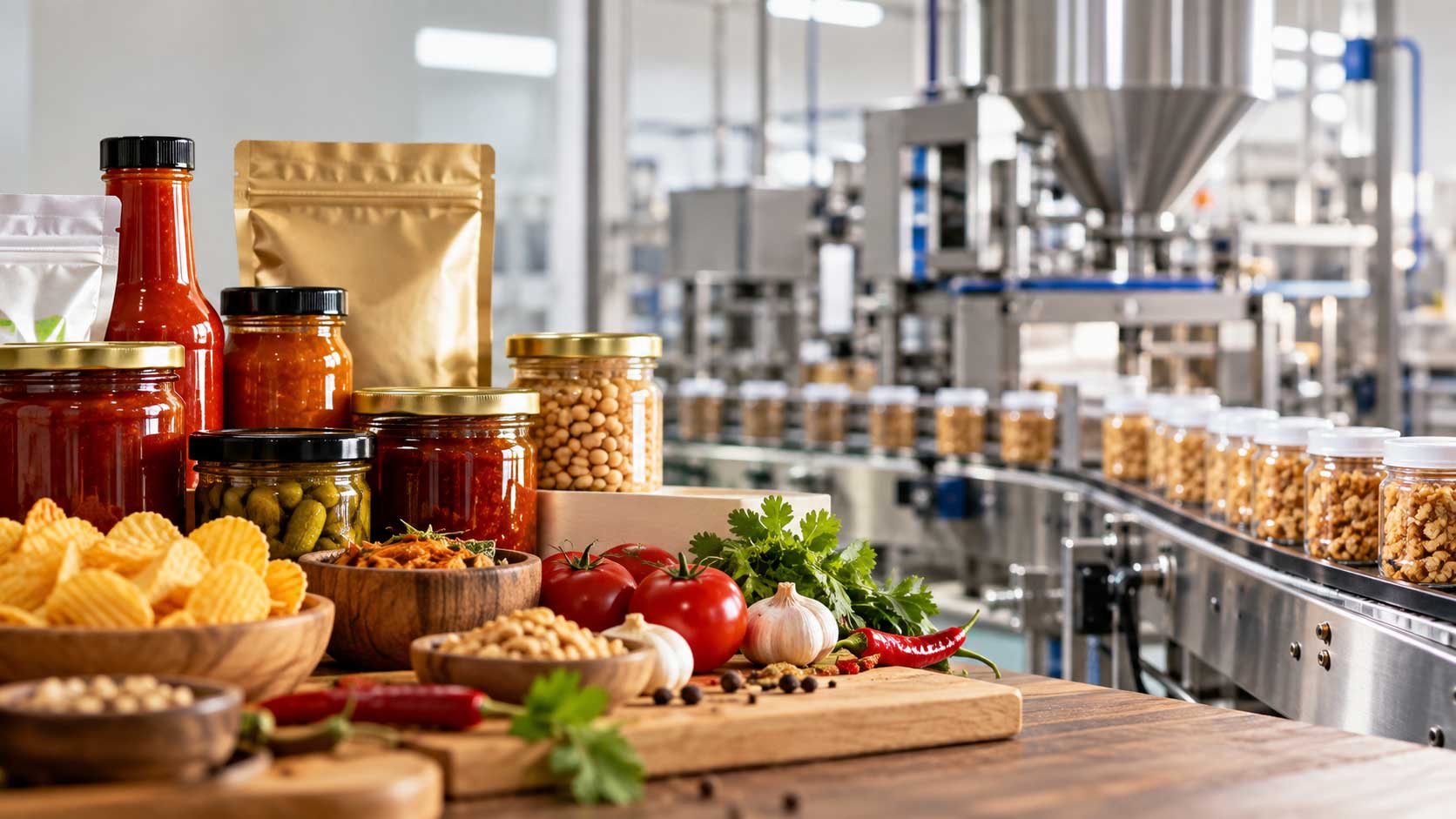
Start with the products your factory actually produces.
Depending on your business, this may include:
- Sauces and condiments
- Snacks
- Beverages
- Frozen food
- Ready-to-eat products
- Food ingredients
- Baking products
There is no need to list every possible food category.
Focus on the products your factory genuinely manufactures. This gives potential buyers a clearer idea of your food manufacturing capabilities and the types of projects your factory can support.
2. Explain Your Production Processes
Once buyers know what you manufacture, they may want to understand how your factory can produce it.
Depending on your actual operation, you can explain processes such as:
- Mixing
- Cooking
- Blending
- Filling
- Bottling
- Sealing
- Freezing
- Packaging
You do not need to turn your website into a technical manual.
A short explanation together with relevant photos can help buyers understand your food manufacturing capabilities more clearly.
Only include processes your factory actually supports.
3. Connect Your Machinery to Your Capabilities
Machinery photos are useful, but simply showing a collection of machines may not tell buyers much.
Instead, explain what each type of equipment helps your factory do.
For example:
Filling Equipment
What products or formats does it support?
Packaging Equipment
What packaging requirements can it handle?
Processing Equipment
Which part of the production process does it support?
This changes the focus from:
“Look at our machines.”
to:
“Here is what our equipment allows us to do.”
That makes your food manufacturing capabilities much easier for potential buyers to understand.
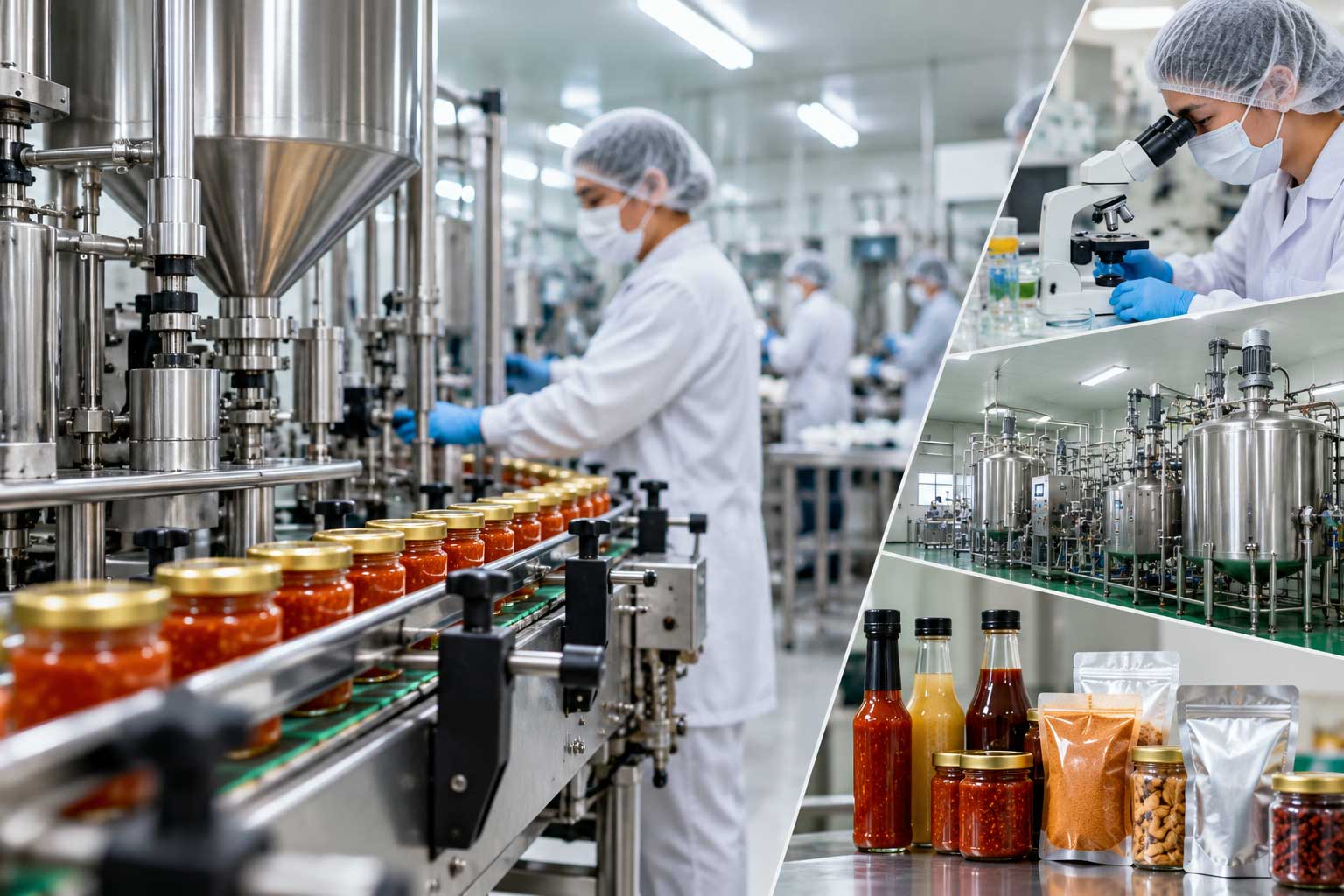
4. Use Real Factory Photos
Real photographs can help buyers get a better understanding of your operation.
Useful images may include:
- Production lines
- Machinery
- Packaging areas
- Storage areas
- Quality control areas
- Employees working in the facility
You do not need to photograph every corner of the factory.
Choose images that support the information you are presenting. Used together with clear explanations, these images can make your food manufacturing capabilities easier to understand.
For manufacturers in Johor Bahru, for example, showing the actual factory, production areas and equipment can give potential customers a clearer picture of your operation.
Most importantly, use genuine photographs of your own facilities rather than generic factory images.
5. Explain Your Packaging and OEM Capabilities
Packaging can be an important part of a food manufacturing project.
Depending on your actual capabilities, you may explain whether you support formats such as:
- Bottles
- Pouches
- Sachets
- Jars
- Cans
- Boxes
If you provide OEM or private label manufacturing, explain how your factory supports these projects.
This could include product customisation, packaging support, private label production or other services your company genuinely provides.
This also helps buyers understand how your food manufacturing capabilities may fit their OEM or private label requirements.
The key is to be specific about what your business actually offers.
6. Make Quality Control Easy to Understand
Potential buyers may also want to know how your company manages product quality.
You do not need to publish confidential internal procedures.
Instead, explain relevant practices such as:
- Raw material checks
- Production monitoring
- Product testing
- Packaging checks
- Hygiene procedures
- Quality inspections
- Traceability
If your company holds relevant certifications, you can also introduce them here, such as Halal, HACCP, GMP or applicable ISO standards, depending on what your business actually holds.
Rather than simply displaying certification logos, add a short explanation so buyers understand what they represent.
Clear quality information can also give buyers a better understanding of your food manufacturing capabilities.
7. Share Useful Factory Information
You can also provide other information that helps buyers understand whether your factory is suitable for their project.
Depending on what your company is comfortable sharing, this may include:
- Number of production lines
- General production scale
- Available packaging lines
- R&D or product development capabilities
- Factory location
- Markets you serve
You do not need to publish sensitive operational information.
The purpose is simply to give buyers enough context to decide whether they should contact your team.
For Malaysian manufacturers serving customers across Malaysia and Singapore, location can also be useful information. If your factory is in Johor or Johor Bahru, make that clear without repeatedly using the same location keywords throughout the page.
If you are also looking to reach overseas customers, you can read our guide on how Malaysian manufacturers can get overseas clients.
What Makes a Factory Website More Useful?
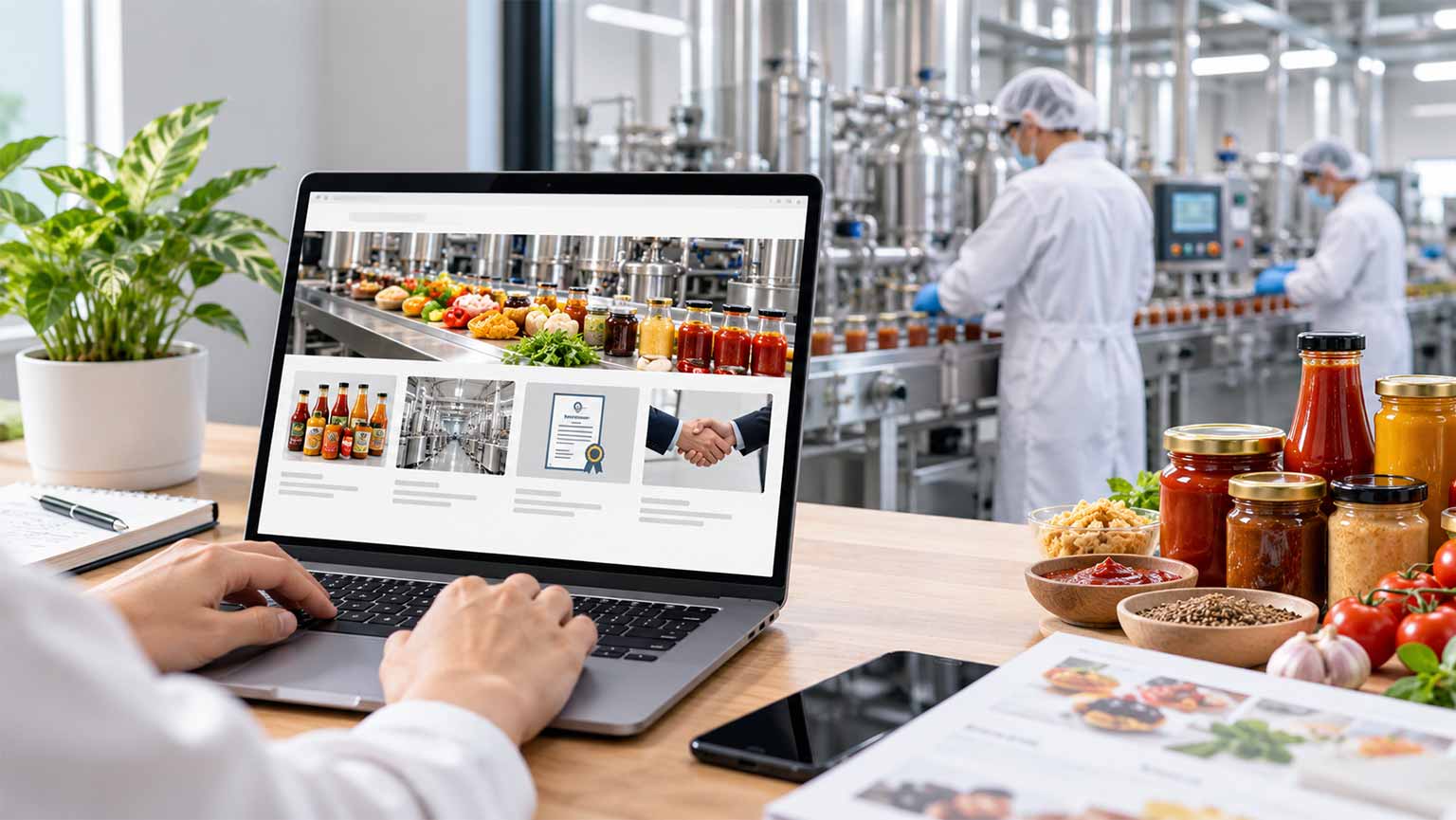
One common mistake is turning your factory page into a photo gallery.
You may have plenty of:
- Machinery photos
- Production photos
- Warehouse photos
- Employee photos
But the buyer may still be asking:
“What can this factory actually do?”
Every photo should support useful information.
For example:
Production Line Photo
→ What products or processes does it support?
Machinery Photo
→ What capability does it provide?
Quality Control Photo
→ What type of checks are carried out?
This makes your factory information easier to understand without overwhelming the buyer.
For a broader guide on what information a food manufacturer should include on its website, you can also read What Should a Food Manufacturer Put on Its Website?.
What If Your Factory Has Strong Capabilities but Your Website Does Not Show Them?
Your business may already have:
- Experienced staff
- Established production processes
- Modern equipment
- Quality control systems
- Multiple packaging options
- OEM experience
But your website may only show a short company introduction and a few old factory photos.
In this situation, the problem may not be your manufacturing operation.
It may simply be that your website is not communicating your food manufacturing capabilities clearly enough.
A website revamp can involve reviewing existing information, reorganising the content and presenting your capabilities more clearly without necessarily rebuilding everything from scratch.
A Simple Way to Review Your Factory Website
Before publishing your factory page, look at it from a potential buyer’s perspective.
Ask:
What do you manufacture?
↓
What production processes do you support?
↓
What equipment and packaging can you handle?
↓
What quality control practices do you follow?
↓
Can you support OEM or private label projects?
↓
Where is your factory?
↓
How can I contact you?
If your website can answer these questions clearly, your food manufacturing capabilities become much easier for buyers to understand.
The aim is not to publish every detail about your factory.
It is to give potential customers enough useful information to decide whether your business may be a suitable manufacturing partner.
Google’s SEO Starter Guide also provides general guidance on creating useful, people-first website content.
Conclusion: Show Buyers What Your Factory Can Do
Your factory website does not need to show everything.
It needs to show the right information clearly.
A useful factory and manufacturing capabilities page should connect:
Factory → Processes → Equipment → Packaging → Quality Control → OEM Support → Enquiry
When these elements are presented clearly, potential buyers can understand your business more easily before contacting your team.
For food manufacturers in Malaysia, especially those based in Johor and Johor Bahru and serving customers in Singapore, this can turn your website into a more useful B2B information resource.
The goal is simple:
Don’t just show buyers your factory. Show them what your factory can do.

How to Present Your Factory and Manufacturing Capabilities Online
A food manufacturer does not need to show every machine, room or production detail on its website.
What matters is whether a potential buyer can quickly understand what your factory can actually do.
For food manufacturers in Malaysia, especially businesses based in Johor and Johor Bahru that also serve customers in Singapore, your website should do more than display a few factory photos.
It should help buyers understand your food manufacturing capabilities, production processes, packaging options and quality control.
The goal is simple:
Don’t just show your factory. Show buyers what your factory can do.
How to Showcase Food Manufacturing Capabilities Online
A factory photo can show that you have a production facility, but it does not necessarily explain what you can manufacture.
When presenting your food manufacturing capabilities, think about the questions a potential buyer may have:
- What products do you manufacture?
- What production processes do you support?
- What packaging can you handle?
- Do you provide OEM or private label manufacturing?
- What quality control practices do you follow?
- Where is your factory located?
Your website should make these answers easy to find.
1. Show What Products You Manufacture
Start with the products your factory actually produces.
Depending on your business, this may include:
- Sauces and condiments
- Snacks
- Beverages
- Frozen food
- Ready-to-eat products
- Food ingredients
- Baking products
There is no need to list every possible food category.
Focus on the products your factory genuinely manufactures. This gives potential buyers a clearer idea of your food manufacturing capabilities and the types of projects your factory can support.
2. Explain Your Production Processes
Once buyers know what you manufacture, they may want to understand how your factory can produce it.
Depending on your actual operation, you can explain processes such as:
- Mixing
- Cooking
- Blending
- Filling
- Bottling
- Sealing
- Freezing
- Packaging
You do not need to turn your website into a technical manual.
A short explanation together with relevant photos can help buyers understand your food manufacturing capabilities more clearly.
Only include processes your factory actually supports.
3. Connect Your Machinery to Your Capabilities
Machinery photos are useful, but simply showing a collection of machines may not tell buyers much.
Instead, explain what each type of equipment helps your factory do.
For example:
Filling Equipment
What products or formats does it support?
Packaging Equipment
What packaging requirements can it handle?
Processing Equipment
Which part of the production process does it support?
This changes the focus from:
“Look at our machines.”
to:
“Here is what our equipment allows us to do.”
That makes your food manufacturing capabilities much easier for potential buyers to understand.
4. Use Real Factory Photos
Real photographs can help buyers get a better understanding of your operation.
Useful images may include:
- Production lines
- Machinery
- Packaging areas
- Storage areas
- Quality control areas
- Employees working in the facility
You do not need to photograph every corner of the factory.
Choose images that support the information you are presenting. Used together with clear explanations, these images can make your food manufacturing capabilities easier to understand.
For manufacturers in Johor Bahru, for example, showing the actual factory, production areas and equipment can give potential customers a clearer picture of your operation.
Most importantly, use genuine photographs of your own facilities rather than generic factory images.
5. Explain Your Packaging and OEM Capabilities
Packaging can be an important part of a food manufacturing project.
Depending on your actual capabilities, you may explain whether you support formats such as:
- Bottles
- Pouches
- Sachets
- Jars
- Cans
- Boxes
If you provide OEM or private label manufacturing, explain how your factory supports these projects.
This could include product customisation, packaging support, private label production or other services your company genuinely provides.
This also helps buyers understand how your food manufacturing capabilities may fit their OEM or private label requirements.
The key is to be specific about what your business actually offers.
6. Make Quality Control Easy to Understand
Potential buyers may also want to know how your company manages product quality.
You do not need to publish confidential internal procedures.
Instead, explain relevant practices such as:
- Raw material checks
- Production monitoring
- Product testing
- Packaging checks
- Hygiene procedures
- Quality inspections
- Traceability
If your company holds relevant certifications, you can also introduce them here, such as Halal, HACCP, GMP or applicable ISO standards, depending on what your business actually holds.
Rather than simply displaying certification logos, add a short explanation so buyers understand what they represent.
Clear quality information can also give buyers a better understanding of your food manufacturing capabilities.
7. Share Useful Factory Information
You can also provide other information that helps buyers understand whether your factory is suitable for their project.
Depending on what your company is comfortable sharing, this may include:
- Number of production lines
- General production scale
- Available packaging lines
- R&D or product development capabilities
- Factory location
- Markets you serve
You do not need to publish sensitive operational information.
The purpose is simply to give buyers enough context to decide whether they should contact your team.
For Malaysian manufacturers serving customers across Malaysia and Singapore, location can also be useful information. If your factory is in Johor or Johor Bahru, make that clear without repeatedly using the same location keywords throughout the page.
If you are also looking to reach overseas customers, you can read our guide on how Malaysian manufacturers can get overseas clients.
What Makes a Factory Website More Useful?
One common mistake is turning your factory page into a photo gallery.
You may have plenty of:
- Machinery photos
- Production photos
- Warehouse photos
- Employee photos
But the buyer may still be asking:
“What can this factory actually do?”
Every photo should support useful information.
For example:
Production Line Photo
→ What products or processes does it support?
Machinery Photo
→ What capability does it provide?
Quality Control Photo
→ What type of checks are carried out?
This makes your factory information easier to understand without overwhelming the buyer.
For a broader guide on what information a food manufacturer should include on its website, you can also read What Should a Food Manufacturer Put on Its Website?.
What If Your Factory Has Strong Capabilities but Your Website Does Not Show Them?
Your business may already have:
- Experienced staff
- Established production processes
- Modern equipment
- Quality control systems
- Multiple packaging options
- OEM experience
But your website may only show a short company introduction and a few old factory photos.
In this situation, the problem may not be your manufacturing operation.
It may simply be that your website is not communicating your food manufacturing capabilities clearly enough.
A website revamp can involve reviewing existing information, reorganising the content and presenting your capabilities more clearly without necessarily rebuilding everything from scratch.
A Simple Way to Review Your Factory Website
Before publishing your factory page, look at it from a potential buyer’s perspective.
Ask:
What do you manufacture?
↓
What production processes do you support?
↓
What equipment and packaging can you handle?
↓
What quality control practices do you follow?
↓
Can you support OEM or private label projects?
↓
Where is your factory?
↓
How can I contact you?
If your website can answer these questions clearly, your food manufacturing capabilities become much easier for buyers to understand.
The aim is not to publish every detail about your factory.
It is to give potential customers enough useful information to decide whether your business may be a suitable manufacturing partner.
Google’s SEO Starter Guide also provides general guidance on creating useful, people-first website content.
Conclusion: Show Buyers What Your Factory Can Do
Your factory website does not need to show everything.
It needs to show the right information clearly.
A useful factory and manufacturing capabilities page should connect:
Factory → Processes → Equipment → Packaging → Quality Control → OEM Support → Enquiry
When these elements are presented clearly, potential buyers can understand your business more easily before contacting your team.
For food manufacturers in Malaysia, especially those based in Johor and Johor Bahru and serving customers in Singapore, this can turn your website into a more useful B2B information resource.
The goal is simple:
Don’t just show buyers your factory. Show them what your factory can do.


