


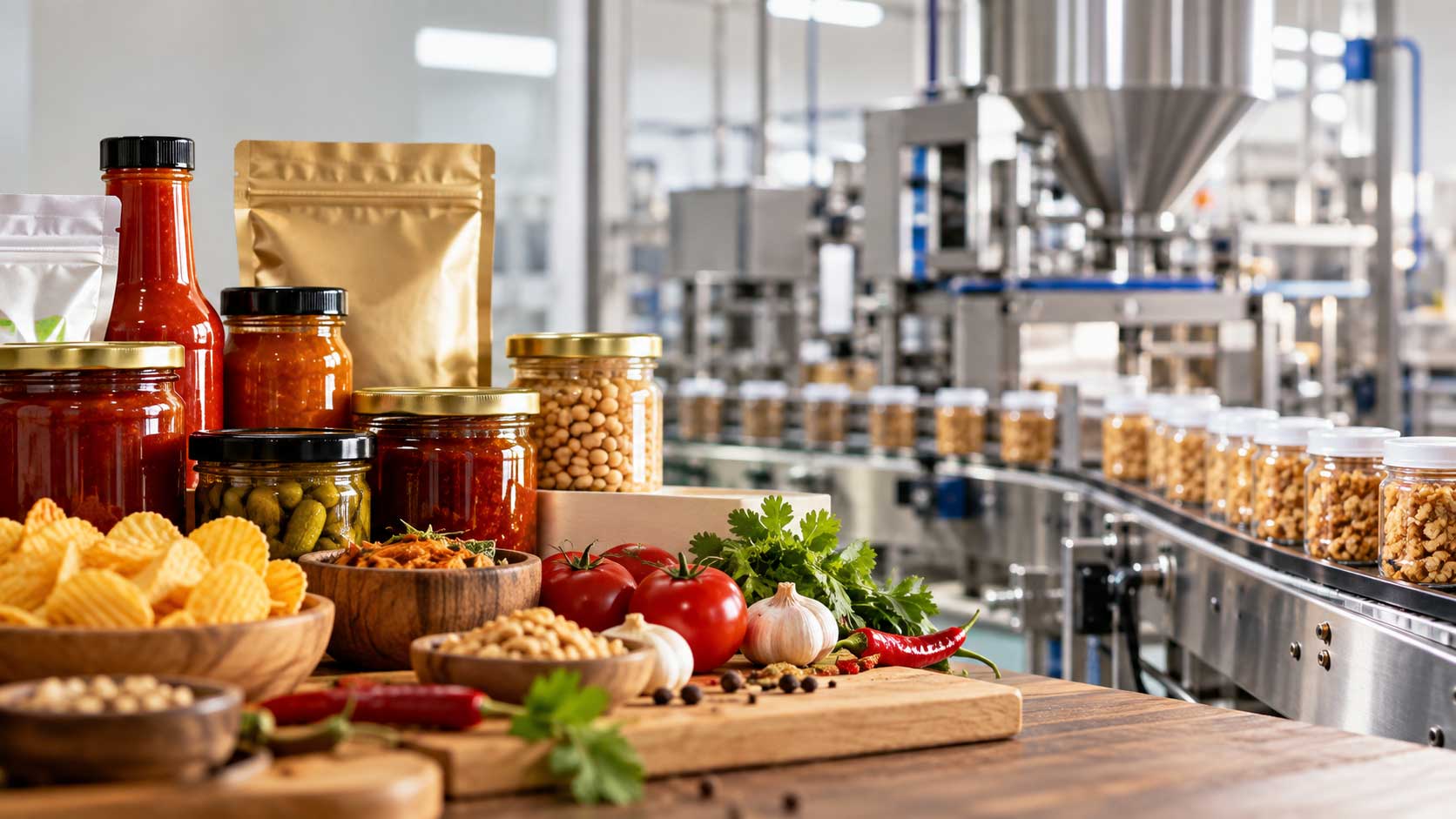
What Kind of Website Suits the Food Industry? A Guide for Malaysian Food Business Owners
When planning a Food Industry Website, the first thing to think about is not the colours, animations or design trends.
The more important question is:
What does your website need to do for your business?
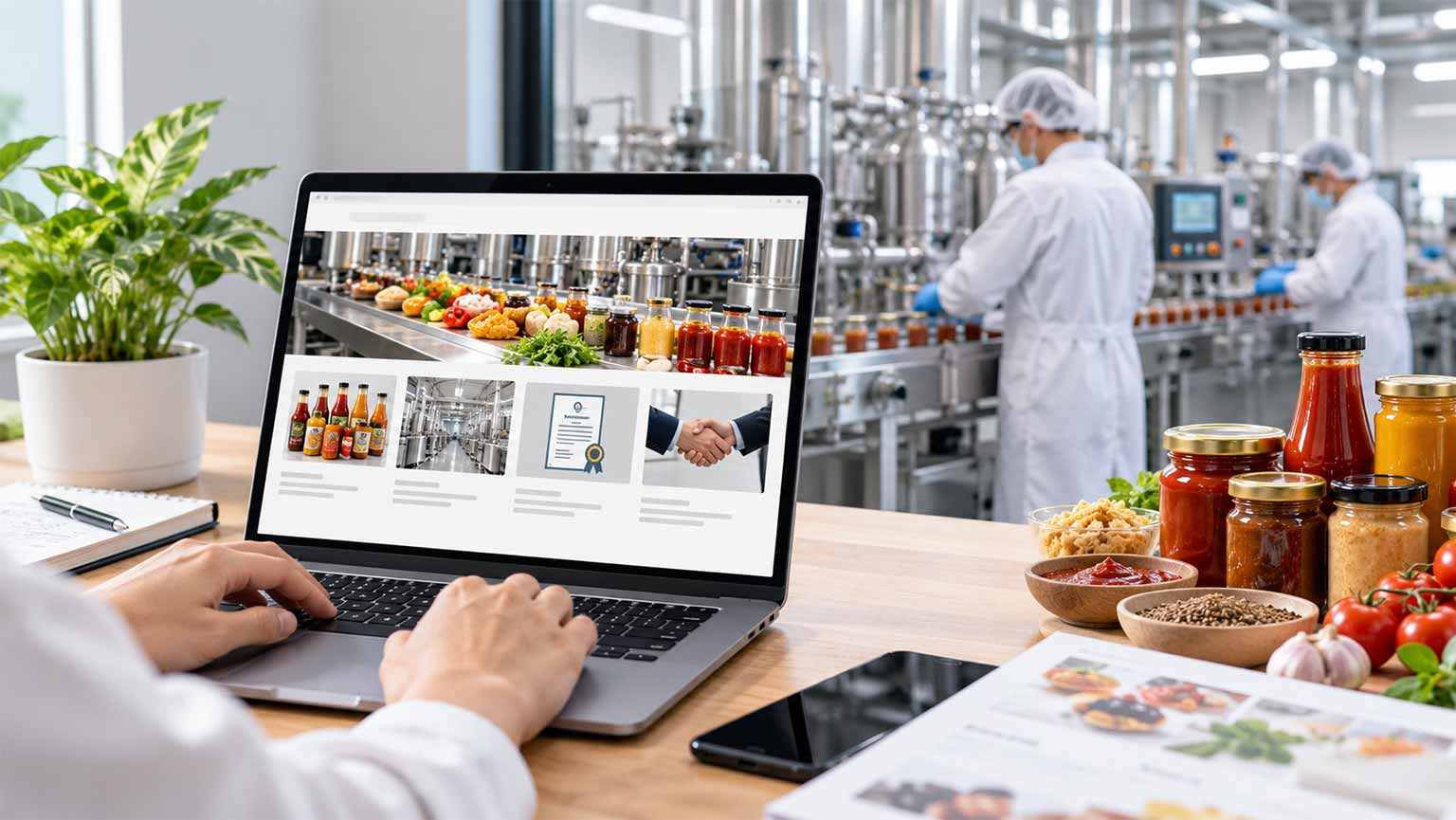
For most Malaysian food manufacturers, a Food Industry Website should make it easy for potential buyers to understand your products, manufacturing capabilities, facilities, certifications and how to contact you.
A consumer food brand may need a more sales-focused website, while a food packaging supplier may need to focus more on product specifications, materials and applications.
The right Food Industry Website should support the way your business communicates with potential customers.
In other words, your website should match your business model and your customers’ needs.
Here are 7 practical things to consider before building or revamping your website.
1. Choose the Right Type of Food Industry Website
Not every food business needs the same type of website.
The type of Food Industry Website you need depends on what your business sells, who you want to reach and how customers normally contact you.
For example:
| Website Type | Suitable For | Main Purpose |
|---|---|---|
| Corporate Website | Food manufacturers, OEM/ODM companies | Company profile, capabilities and facilities |
| E-Catalog Website | Food suppliers, packaging companies | Product, specifications and applications |
| E-Commerce Website | Consumer food brands | Online sales and transactions |
| Hybrid Website | Businesses serving both B2B and B2C | Company information + online sales |
For example, if you are a food manufacturer that mainly receives enquiries from distributors, retailers or other businesses, you may not need a full e-commerce website.
A well-organised product catalogue with clear product information and an easy enquiry process may be more suitable.
You can also learn more about the different website structures in our guide to 3 Types of Website Design.
The key is to choose a website structure based on your business model, target audience and communication needs — not simply because a particular website style looks popular.
2. Build Your Food Industry Website Around Buyer Needs
Once you know what type of Food Industry Website you need, the next step is to think about what potential buyers want to know.
For a food manufacturer, useful information may include:
| Information | Why It Matters |
|---|---|
| Products | Helps buyers understand what you produce |
| Manufacturing Capabilities | Shows what you can manufacture |
| Factory & Facilities | Gives buyers a better idea of your operations |
| OEM / Private Label | Shows whether custom production is available |
| Product Specifications | Provides useful product details |
| MOQ / Order Information | Helps set expectations where applicable |
| Certifications & Standards | Makes quality information easier to find |
| Product & Factory Photos | Gives a more realistic view of your business |
| Enquiry Form / WhatsApp | Makes it easy to contact you |
| Catalogue / Downloads | Allows buyers to review or share information |
| FAQ | Answers common questions |
A good Food Industry Website should answer these questions without making visitors search through too many pages.
This is one of the most useful food business website tips for manufacturers:
Do not make buyers go through several pages just to understand what your company actually does.
When someone visits your website for the first time, they should be able to answer basic questions such as:
- What do you produce?
- What can you manufacture?
- Who do you serve?
- What certifications or standards do you have?
- How can I contact you?
For food manufacturers, a clear Food Manufacturing Website can help organise these important details in one place.
3. Make Certifications Easy to Find and Understand
For food businesses, certifications and quality information can be an important part of how potential buyers evaluate a supplier.
For a Food Industry Website, these details should be easy to find rather than hidden in the footer or across several different pages.
Some common problems include:
- Certification logos are only shown in the footer
- Logos are displayed without clear names
- There is no explanation of what the certification relates to
- Supporting documents are difficult to find
- Information is not updated
A better approach is to create a clear Certifications & Quality section.
Depending on the business, you may include:
- Certification names
- Relevant certification numbers
- Validity information where appropriate
- Supporting documents
- A short explanation of what each certification relates to
The information should also be reviewed regularly to make sure it remains accurate.
For Malaysian food businesses, product and certification information should also be considered alongside the requirements that apply to the relevant products. The Malaysia Ministry of Health Food Regulations 1985 covers areas including food standards and labelling.
4. Good Food Website Design Starts With the Right Colours
When planning a food website design, colours should not be chosen simply because they look good or because they are commonly used in the food industry.
For a Food Industry Website, we usually start by looking at the company’s logo and existing brand colours.
From there, we can choose supporting colours that work well with the brand and use them consistently throughout the website.
However, using the same colours as the logo does not mean putting those colours everywhere.
We also need to look at whether the colours work well together, whether the overall page feels balanced, and whether the text and important buttons are easy to see.
The colours of a Food Industry Website should work well with the company’s existing brand identity while still keeping the website clear and easy to use.
Once the main colour direction is clear, we can then consider the type of food business and the image the company wants to present.
For example:
| Colour Direction | Common Impression | Suitable For |
|---|---|---|
| Red / Orange | Warm, energetic, bold | Snacks, sauces, consumer food |
| Yellow | Friendly, cheerful | Casual or family food products |
| Green | Fresh, natural | Organic, health or plant-based products |
| Brown / Earth Tones | Natural, traditional | Coffee, traditional or natural food |
| White / Neutral | Clean, modern | Premium food brands, corporate manufacturers |
| Black / Gold | Premium, refined | Specialty or luxury food products |
These are only general visual directions, not fixed rules.
A green website, for example, does not automatically make a food brand look healthy.
Photography, typography, spacing, layout and product presentation also play a big part in how the website feels.
The main question should always be:
What should visitors understand about your brand when they first visit your website?
5. Different Food Businesses Need Different Website Styles
One common mistake is choosing a website style before thinking about the company’s positioning.
This is why there is no single design style that works for every Food Industry Website.
Different food businesses may need different website directions.
| Business Type | Possible Website Direction |
|---|---|
| Mass-Market Manufacturer | Clear, practical and product-focused |
| Premium Food Brand | Strong photography, spacious and brand-led |
| Health / Natural Food | Clean visuals, natural tones and ingredient-focused |
| Traditional Local Food | Storytelling, heritage and warmer visuals |
| OEM / Contract Manufacturer | Capabilities, facilities, processes and enquiries |
| Food Packaging Supplier | Products, materials, applications and specifications |
For example, an OEM food manufacturer may want to show its manufacturing capabilities and private-label services early on.
A consumer food brand may place more focus on product photography, brand story and direct purchases.
A food packaging supplier may need to provide information about materials, sizes, applications and technical specifications.
This is why a website for food manufacturers Malaysia should not be treated as one fixed template.
The website should reflect how your target customers look at your business.
6. Use Real Product and Factory Photos Where It Matters
Good visuals can make a Food Industry Website more attractive, but it is also important to show what the business actually looks like.
AI-generated images can be useful for creative concepts, campaigns or supporting graphics.
But when you are showing actual products, packaging, factories or production facilities, real photography is usually a better choice.
For example, you can use:
- Real product photography
- Actual packaging photos
- Factory and equipment photos
- Production area photos
- Professionally edited business photos
- AI visuals for selected supporting graphics
Try to avoid using an AI-generated product image as if it were the actual product.
The same applies to factories, packaging details and production facilities that do not really exist.
For B2B businesses, this can be especially important because potential buyers may want to see what your actual products, packaging and facilities look like before making an enquiry.
A professional website does not have to look unrealistically perfect.
It should present the real business clearly, accurately and professionally.
7. Look at Your Website From a Buyer’s Point of View
Before launching your Food Industry Website, try looking at it as someone who has never worked with your company before.
Can they quickly find:
- Your products?
- Your manufacturing capabilities?
- OEM or private-label services?
- Your factory or facilities?
- Your certifications?
- The markets or industries you serve?
- How to request more information?
If these things are difficult to find, the problem may not simply be the design.
It could be the navigation, content structure, product presentation or enquiry process.
This is one of the most practical food business website tips:
You do not always need to rebuild everything.
Sometimes, improving the navigation, organising the content more clearly, presenting products better and making the enquiry process easier can already make a big difference.
If your existing website already has useful information but looks outdated or no longer matches your business, a Website Revamp may be worth considering.
What If You Already Have Shopee, Lazada, Facebook or TikTok?
Having a Food Industry Website does not mean you need to stop using platforms like Shopee, Lazada, Facebook or TikTok.
Each platform can play a different role in your online presence.
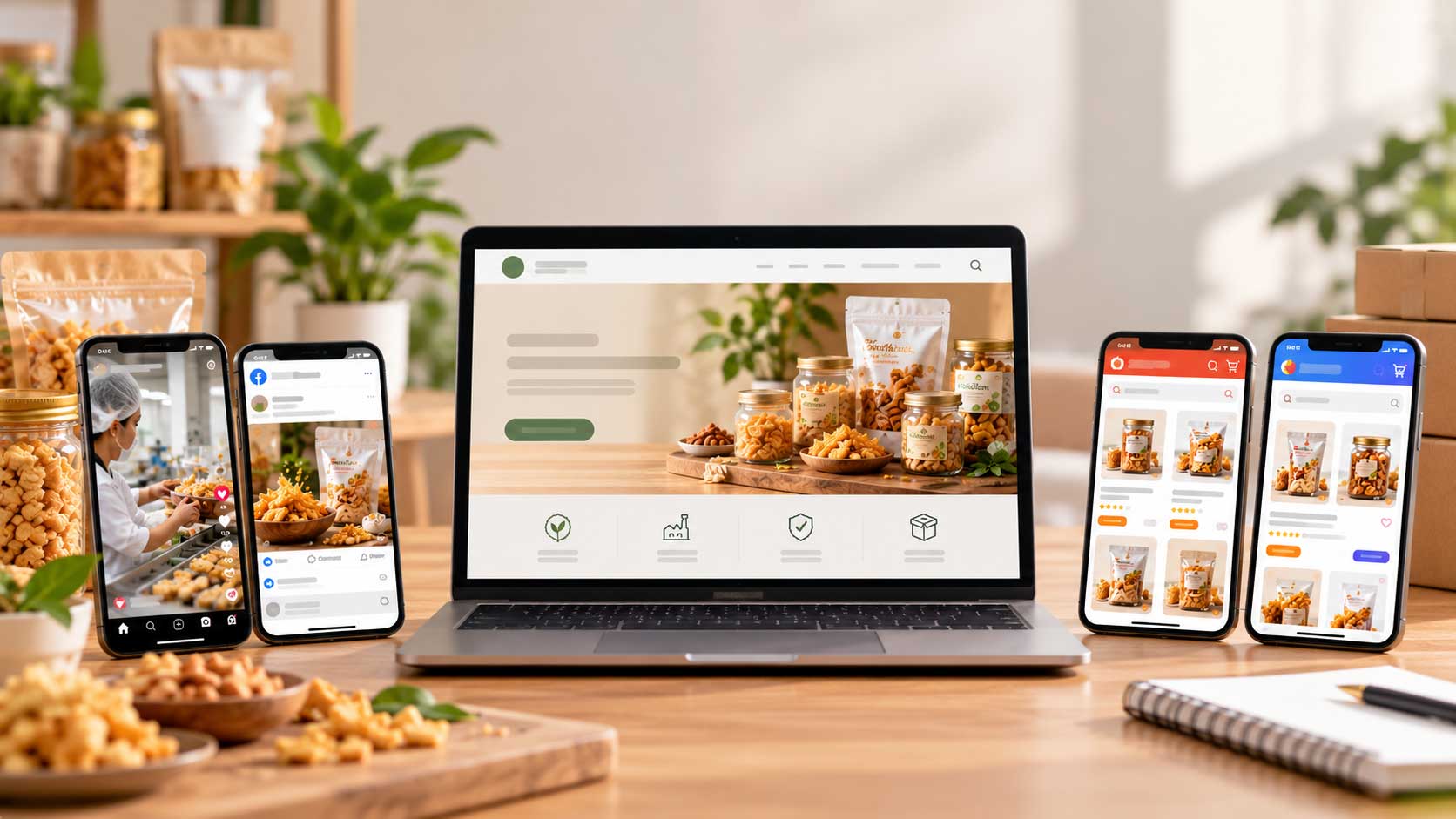
- Shopee / Lazada — Mainly for product listings and online transactions
- Facebook / TikTok — Mainly for content, audience engagement and product discovery
- Company Website — For presenting your company, products, manufacturing capabilities, certifications, facilities and enquiry channels
These platforms can also support your overall online visibility.
For example, your social media posts, product listings and other online profiles can help people discover your brand and provide additional information about your business.
They can work alongside your website as part of your wider online presence, rather than being treated as a replacement for your own website.
For food manufacturers, potential buyers may want to know more about the company behind the products — such as what you manufacture, whether you provide OEM or private-label services, what facilities you have, and how they can contact you.
A company website gives you one place to organise and present this information clearly.
As for how marketplaces, social media and a company website can work together, our latest article explores how these channels can support each other as part of your wider online presence.
Conclusion: Build a Website That Fits Your Business
The right Food Industry Website does not need to be complicated.
Before thinking about fancy animations or the latest design trends, make sure you have answered these basic questions:
- What type of website does your business need?
- What information do your buyers want to see?
- Are your certifications and quality information easy to find?
- Do your colours match your brand and overall positioning?
- Are you showing real products and facilities where appropriate?
- Does the website clearly explain your capabilities?
- Can visitors easily take the next step and contact you?
A well-planned Food Industry Website should make it easier for potential customers to understand your business and decide what to do next.
Once these fundamentals are clear, the design process becomes much easier.
A good website is not simply about looking professional.
It should help potential customers understand who you are, what you offer and how they can work with you.
Whether you are building a new Food Industry Website or improving an existing one, the main goal should always be clarity, trust and an easy way for customers to get in touch.
If you are planning a new website or looking to improve your current one, you can learn more about our Website Development services.
Or, if you already have a clear idea of what you need, you can Contact Us to discuss your website requirements with our team.

What Kind of Website Suits the Food Industry? A Guide for Malaysian Food Business Owners
When planning a Food Industry Website, the first thing to think about is not the colours, animations or design trends.
The more important question is:
What does your website need to do for your business?
For most Malaysian food manufacturers, a Food Industry Website should make it easy for potential buyers to understand your products, manufacturing capabilities, facilities, certifications and how to contact you.
A consumer food brand may need a more sales-focused website, while a food packaging supplier may need to focus more on product specifications, materials and applications.
The right Food Industry Website should support the way your business communicates with potential customers.
In other words, your website should match your business model and your customers’ needs.
Here are 7 practical things to consider before building or revamping your website.
1. Choose the Right Type of Food Industry Website
Not every food business needs the same type of website.
The type of Food Industry Website you need depends on what your business sells, who you want to reach and how customers normally contact you.
For example:
| Website Type | Suitable For | Main Purpose |
|---|---|---|
| Corporate Website | Food manufacturers, OEM/ODM companies | Company profile, capabilities and facilities |
| E-Catalog Website | Food suppliers, packaging companies | Product, specifications and applications |
| E-Commerce Website | Consumer food brands | Online sales and transactions |
| Hybrid Website | Businesses serving both B2B and B2C | Company information + online sales |
For example, if you are a food manufacturer that mainly receives enquiries from distributors, retailers or other businesses, you may not need a full e-commerce website.
A well-organised product catalogue with clear product information and an easy enquiry process may be more suitable.
You can also learn more about the different website structures in our guide to 3 Types of Website Design.
The key is to choose a website structure based on your business model, target audience and communication needs — not simply because a particular website style looks popular.
2. Build Your Food Industry Website Around Buyer Needs
Once you know what type of Food Industry Website you need, the next step is to think about what potential buyers want to know.
For a food manufacturer, useful information may include:
| Information | Why It Matters |
|---|---|
| Products | Helps buyers understand what you produce |
| Manufacturing Capabilities | Shows what you can manufacture |
| Factory & Facilities | Gives buyers a better idea of your operations |
| OEM / Private Label | Shows whether custom production is available |
| Product Specifications | Provides useful product details |
| MOQ / Order Information | Helps set expectations where applicable |
| Certifications & Standards | Makes quality information easier to find |
| Product & Factory Photos | Gives a more realistic view of your business |
| Enquiry Form / WhatsApp | Makes it easy to contact you |
| Catalogue / Downloads | Allows buyers to review or share information |
| FAQ | Answers common questions |
A good Food Industry Website should answer these questions without making visitors search through too many pages.
This is one of the most useful food business website tips for manufacturers:
Do not make buyers go through several pages just to understand what your company actually does.
When someone visits your website for the first time, they should be able to answer basic questions such as:
- What do you produce?
- What can you manufacture?
- Who do you serve?
- What certifications or standards do you have?
- How can I contact you?
For food manufacturers, a clear Food Manufacturing Website can help organise these important details in one place.
3. Make Certifications Easy to Find and Understand
For food businesses, certifications and quality information can be an important part of how potential buyers evaluate a supplier.
For a Food Industry Website, these details should be easy to find rather than hidden in the footer or across several different pages.
Some common problems include:
- Certification logos are only shown in the footer
- Logos are displayed without clear names
- There is no explanation of what the certification relates to
- Supporting documents are difficult to find
- Information is not updated
A better approach is to create a clear Certifications & Quality section.
Depending on the business, you may include:
- Certification names
- Relevant certification numbers
- Validity information where appropriate
- Supporting documents
- A short explanation of what each certification relates to
The information should also be reviewed regularly to make sure it remains accurate.
For Malaysian food businesses, product and certification information should also be considered alongside the requirements that apply to the relevant products. The Malaysia Ministry of Health Food Regulations 1985 covers areas including food standards and labelling.
4. Good Food Website Design Starts With the Right Colours
When planning a food website design, colours should not be chosen simply because they look good or because they are commonly used in the food industry.
For a Food Industry Website, we usually start by looking at the company’s logo and existing brand colours.
From there, we can choose supporting colours that work well with the brand and use them consistently throughout the website.
However, using the same colours as the logo does not mean putting those colours everywhere.
We also need to look at whether the colours work well together, whether the overall page feels balanced, and whether the text and important buttons are easy to see.
The colours of a Food Industry Website should work well with the company’s existing brand identity while still keeping the website clear and easy to use.
Once the main colour direction is clear, we can then consider the type of food business and the image the company wants to present.
For example:
| Colour Direction | Common Impression | Suitable For |
|---|---|---|
| Red / Orange | Warm, energetic, bold | Snacks, sauces, consumer food |
| Yellow | Friendly, cheerful | Casual or family food products |
| Green | Fresh, natural | Organic, health or plant-based products |
| Brown / Earth Tones | Natural, traditional | Coffee, traditional or natural food |
| White / Neutral | Clean, modern | Premium food brands, corporate manufacturers |
| Black / Gold | Premium, refined | Specialty or luxury food products |
These are only general visual directions, not fixed rules.
A green website, for example, does not automatically make a food brand look healthy.
Photography, typography, spacing, layout and product presentation also play a big part in how the website feels.
The main question should always be:
What should visitors understand about your brand when they first visit your website?
5. Different Food Businesses Need Different Website Styles
One common mistake is choosing a website style before thinking about the company’s positioning.
This is why there is no single design style that works for every Food Industry Website.
Different food businesses may need different website directions.
| Business Type | Possible Website Direction |
|---|---|
| Mass-Market Manufacturer | Clear, practical and product-focused |
| Premium Food Brand | Strong photography, spacious and brand-led |
| Health / Natural Food | Clean visuals, natural tones and ingredient-focused |
| Traditional Local Food | Storytelling, heritage and warmer visuals |
| OEM / Contract Manufacturer | Capabilities, facilities, processes and enquiries |
| Food Packaging Supplier | Products, materials, applications and specifications |
For example, an OEM food manufacturer may want to show its manufacturing capabilities and private-label services early on.
A consumer food brand may place more focus on product photography, brand story and direct purchases.
A food packaging supplier may need to provide information about materials, sizes, applications and technical specifications.
This is why a website for food manufacturers Malaysia should not be treated as one fixed template.
The website should reflect how your target customers look at your business.
6. Use Real Product and Factory Photos Where It Matters
Good visuals can make a Food Industry Website more attractive, but it is also important to show what the business actually looks like.
AI-generated images can be useful for creative concepts, campaigns or supporting graphics.
But when you are showing actual products, packaging, factories or production facilities, real photography is usually a better choice.
For example, you can use:
- Real product photography
- Actual packaging photos
- Factory and equipment photos
- Production area photos
- Professionally edited business photos
- AI visuals for selected supporting graphics
Try to avoid using an AI-generated product image as if it were the actual product.
The same applies to factories, packaging details and production facilities that do not really exist.
For B2B businesses, this can be especially important because potential buyers may want to see what your actual products, packaging and facilities look like before making an enquiry.
A professional website does not have to look unrealistically perfect.
It should present the real business clearly, accurately and professionally.
7. Look at Your Website From a Buyer’s Point of View
Before launching your Food Industry Website, try looking at it as someone who has never worked with your company before.
Can they quickly find:
- Your products?
- Your manufacturing capabilities?
- OEM or private-label services?
- Your factory or facilities?
- Your certifications?
- The markets or industries you serve?
- How to request more information?
If these things are difficult to find, the problem may not simply be the design.
It could be the navigation, content structure, product presentation or enquiry process.
This is one of the most practical food business website tips:
You do not always need to rebuild everything.
Sometimes, improving the navigation, organising the content more clearly, presenting products better and making the enquiry process easier can already make a big difference.
If your existing website already has useful information but looks outdated or no longer matches your business, a Website Revamp may be worth considering.
What If You Already Have Shopee, Lazada, Facebook or TikTok?
Having a Food Industry Website does not mean you need to stop using platforms like Shopee, Lazada, Facebook or TikTok.
Each platform can play a different role in your online presence.
- Shopee / Lazada — Mainly for product listings and online transactions
- Facebook / TikTok — Mainly for content, audience engagement and product discovery
- Company Website — For presenting your company, products, manufacturing capabilities, certifications, facilities and enquiry channels
These platforms can also support your overall online visibility.
For example, your social media posts, product listings and other online profiles can help people discover your brand and provide additional information about your business.
They can work alongside your website as part of your wider online presence, rather than being treated as a replacement for your own website.
For food manufacturers, potential buyers may want to know more about the company behind the products — such as what you manufacture, whether you provide OEM or private-label services, what facilities you have, and how they can contact you.
A company website gives you one place to organise and present this information clearly.
As for how marketplaces, social media and a company website can work together, our latest article explores how these channels can support each other as part of your wider online presence.
Conclusion: Build a Website That Fits Your Business
The right Food Industry Website does not need to be complicated.
Before thinking about fancy animations or the latest design trends, make sure you have answered these basic questions:
- What type of website does your business need?
- What information do your buyers want to see?
- Are your certifications and quality information easy to find?
- Do your colours match your brand and overall positioning?
- Are you showing real products and facilities where appropriate?
- Does the website clearly explain your capabilities?
- Can visitors easily take the next step and contact you?
A well-planned Food Industry Website should make it easier for potential customers to understand your business and decide what to do next.
Once these fundamentals are clear, the design process becomes much easier.
A good website is not simply about looking professional.
It should help potential customers understand who you are, what you offer and how they can work with you.
Whether you are building a new Food Industry Website or improving an existing one, the main goal should always be clarity, trust and an easy way for customers to get in touch.
If you are planning a new website or looking to improve your current one, you can learn more about our Website Development services.
Or, if you already have a clear idea of what you need, you can Contact Us to discuss your website requirements with our team.


