


Website Cost in Malaysia Explained for Business Owners (2026)
Building a website is one of the most important digital investments for businesses today. Whether you are launching a new website or upgrading an existing one, understanding the real website cost in Malaysia helps you plan your budget more effectively and avoid unnecessary surprises.
Website pricing in Malaysia varies because different businesses require different levels of design, functionality, and ongoing support. As more companies strengthen their online presence in 2026, knowing how website costs are structured becomes increasingly important. Understanding what influences website price allows businesses to compare providers confidently, set realistic expectations, and make informed decisions. This guide explains the key factors that affect website costs and what companies in Malaysia can expect to pay for a professionally built website.
Typical Website Cost Ranges in Malaysia (2026)
There is no fixed price for a website in Malaysia, as costs depend on project scope and requirements. However, most business websites generally fall within a few common ranges.
Basic business websites with limited pages and standard layouts are usually designed to establish an online presence and provide essential information. More comprehensive SME or corporate websites involve custom design, structured content, and additional features to support branding and lead generation. E-commerce websites typically require a higher investment due to product management, payment integration, and security considerations.
These ranges reflect the typical website price Malaysia businesses encounter when planning a professional website.
Key Factors That Influence Website Pricing
Website price in Malaysia varies because different projects require different levels of time, design, and technical effort. Understanding these factors helps explain why quotations can differ between providers.
Key factors that affect website cost include:
- Number of pages and content scope
Websites with multiple service pages, detailed sections, and structured layouts require more planning and development time than simpler sites. - Design customisation level
Template-based designs are usually more affordable, while custom-designed websites involve additional time for visual planning, revisions, and refinement. - Features and functionality
Functions such as contact forms, booking systems, member areas, or third-party integrations increase complexity and development effort. - Project timeline and collaboration
Short timelines, frequent revisions, or extended feedback cycles may increase overall development costs.
Based on Different Development Options
Website pricing can also vary depending on how the website is developed and who is responsible for the work. Different approaches suit different business needs and budgets.
- Freelance Web Designer
Freelance web designers in Malaysia usually work on a project basis or charge hourly rates rather than fixed packages. This option is often suitable for smaller websites or businesses with clearly defined requirements and limited scope.Website price can vary depending on the freelancer’s experience, availability, and working style. While freelancers may offer greater flexibility and lower upfront cost, ongoing support, scalability, and long-term availability often depend on individual capacity. - Web Design Agency
Web design agencies typically operate as a team, combining design, development, and project management capabilities. This approach allows for a more structured process, clearer timelines, and access to a wider range of technical expertise.Agency website cost in Malaysia is generally higher compared to freelance options, as pricing often reflects planning, quality control, and post-launch support. This option is commonly chosen by SMEs and growing businesses that require reliability, scalability, and longer-term support. - In-House Web Designer
Hiring an in-house web designer involves a fixed monthly salary rather than a one-time website development cost. This option is more suitable for organisations that require frequent website updates, continuous design work, or close internal collaboration.While long-term costs may be higher, having an in-house designer allows for faster changes and greater control over internal priorities. For many SMEs, however, this approach may not be cost-efficient if website development is not an ongoing operational need.

One-Time Website Cost vs Ongoing Website Costs
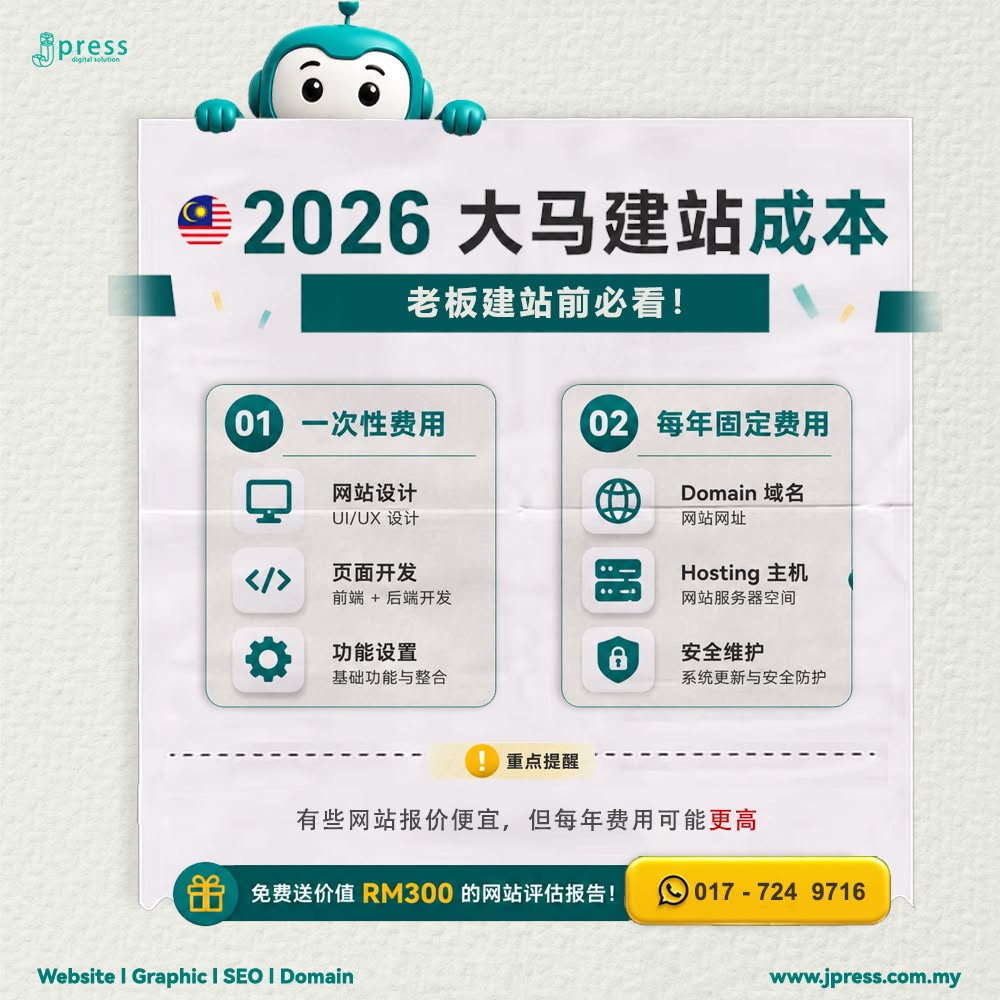
When evaluating website cost in Malaysia, it is important to separate one-time setup costs from ongoing expenses. Many misunderstandings happen when businesses assume everything is covered in a single price.
- Design & Development
Design and development costs are typically a one-time investment. This includes website structure, visual design, content layout, and feature implementation. The final cost depends on the number of pages, design complexity, and functionality required. - Domain & Hosting
Hosting and domain costs are recurring expenses. Hosting keeps the website accessible online, while the domain represents the website address. These costs are usually billed annually and vary based on performance, security, and reliability requirements. - Maintenance & Updates
Maintenance and updates ensure the website remains secure, functional, and compatible with system updates. This may include software updates, backups, and minor technical fixes. Some businesses manage this internally, while others prefer ongoing support services. - Optional SEO
Optional SEO or content support may also form part of ongoing website costs. This can include content updates, technical optimisation, or improvements that support long-term visibility and performance.
Understanding the difference between one-time and ongoing website costs helps businesses plan more accurately and avoid surprises after launch. Working with a website provider that clearly explains all costs upfront can help businesses avoid hidden fees and make better long-term decisions.
Understanding Different Website Approaches
Cheap website options may suit businesses with limited budgets or simple requirements, as they often rely on basic templates and minimal customisation.
More basic website approaches usually involve:
- Pre-designed templates with limited flexibility
- Simple structure and core features
- Lower upfront investment
More comprehensive website approaches focus on:
- Clear structure and improved usability
- Better performance and scalability
- Easier maintenance and long-term growth
Website Cost in Malaysia by Business Type
Website cost in Malaysia varies depending on business type and objectives.
- Small businesses & startups
Focus on clarity, credibility, and essential information - SMEs & service-based companies
Require structured content, lead capture, and stronger branding - E-commerce businesses
Prioritise functionality, security, and user experience
Planning Your Website Budget
There is no single standard website cost in Malaysia, as pricing varies based on scope, complexity, and long-term requirements. Understanding these factors helps businesses plan more effectively and avoid surprises after launch. For business owners who want clearer guidance based on their actual needs, contact with our team to discuss suitable fixed-price options and next steps.


Website Cost in Malaysia Explained for Business Owners (2026)
Building a website is one of the most important digital investments for businesses today. Whether you are launching a new website or upgrading an existing one, understanding the real website cost in Malaysia helps you plan your budget more effectively and avoid unnecessary surprises.
Website pricing in Malaysia varies because different businesses require different levels of design, functionality, and ongoing support. As more companies strengthen their online presence in 2026, knowing how website costs are structured becomes increasingly important. Understanding what influences website price allows businesses to compare providers confidently, set realistic expectations, and make informed decisions. This guide explains the key factors that affect website costs and what companies in Malaysia can expect to pay for a professionally built website.
Typical Website Cost Ranges in Malaysia (2026)
There is no fixed price for a website in Malaysia, as costs depend on project scope and requirements. However, most business websites generally fall within a few common ranges.
Basic business websites with limited pages and standard layouts are usually designed to establish an online presence and provide essential information. More comprehensive SME or corporate websites involve custom design, structured content, and additional features to support branding and lead generation. E-commerce websites typically require a higher investment due to product management, payment integration, and security considerations.
These ranges reflect the typical website price Malaysia businesses encounter when planning a professional website.
Key Factors That Influence Website Pricing
Website price in Malaysia varies because different projects require different levels of time, design, and technical effort. Understanding these factors helps explain why quotations can differ between providers.
Key factors that affect website cost include:
- Number of pages and content scope
Websites with multiple service pages, detailed sections, and structured layouts require more planning and development time than simpler sites. - Design customisation level
Template-based designs are usually more affordable, while custom-designed websites involve additional time for visual planning, revisions, and refinement. - Features and functionality
Functions such as contact forms, booking systems, member areas, or third-party integrations increase complexity and development effort. - Project timeline and collaboration
Short timelines, frequent revisions, or extended feedback cycles may increase overall development costs.
Based on Different Development Options
Website pricing can also vary depending on how the website is developed and who is responsible for the work. Different approaches suit different business needs and budgets.
- Freelance Web Designer
Freelance web designers in Malaysia usually work on a project basis or charge hourly rates rather than fixed packages. This option is often suitable for smaller websites or businesses with clearly defined requirements and limited scope.Website price can vary depending on the freelancer’s experience, availability, and working style. While freelancers may offer greater flexibility and lower upfront cost, ongoing support, scalability, and long-term availability often depend on individual capacity. - Web Design Agency
Web design agencies typically operate as a team, combining design, development, and project management capabilities. This approach allows for a more structured process, clearer timelines, and access to a wider range of technical expertise.Agency website cost in Malaysia is generally higher compared to freelance options, as pricing often reflects planning, quality control, and post-launch support. This option is commonly chosen by SMEs and growing businesses that require reliability, scalability, and longer-term support. - In-House Web Designer
Hiring an in-house web designer involves a fixed monthly salary rather than a one-time website development cost. This option is more suitable for organisations that require frequent website updates, continuous design work, or close internal collaboration.While long-term costs may be higher, having an in-house designer allows for faster changes and greater control over internal priorities. For many SMEs, however, this approach may not be cost-efficient if website development is not an ongoing operational need.
One-Time Website Cost vs Ongoing Website Costs
When evaluating website cost in Malaysia, it is important to separate one-time setup costs from ongoing expenses. Many misunderstandings happen when businesses assume everything is covered in a single price.
- Design & Development
Design and development costs are typically a one-time investment. This includes website structure, visual design, content layout, and feature implementation. The final cost depends on the number of pages, design complexity, and functionality required. - Domain & Hosting
Hosting and domain costs are recurring expenses. Hosting keeps the website accessible online, while the domain represents the website address. These costs are usually billed annually and vary based on performance, security, and reliability requirements. - Maintenance & Updates
Maintenance and updates ensure the website remains secure, functional, and compatible with system updates. This may include software updates, backups, and minor technical fixes. Some businesses manage this internally, while others prefer ongoing support services. - Optional SEO
Optional SEO or content support may also form part of ongoing website costs. This can include content updates, technical optimisation, or improvements that support long-term visibility and performance.
Understanding the difference between one-time and ongoing website costs helps businesses plan more accurately and avoid surprises after launch. Working with a website provider that clearly explains all costs upfront can help businesses avoid hidden fees and make better long-term decisions.
Understanding Different Website Approaches
Cheap website options may suit businesses with limited budgets or simple requirements, as they often rely on basic templates and minimal customisation.
More basic website approaches usually involve:
- Pre-designed templates with limited flexibility
- Simple structure and core features
- Lower upfront investment
More comprehensive website approaches focus on:
- Clear structure and improved usability
- Better performance and scalability
- Easier maintenance and long-term growth
Website Cost in Malaysia by Business Type
Website cost in Malaysia varies depending on business type and objectives.
- Small businesses & startups
Focus on clarity, credibility, and essential information - SMEs & service-based companies
Require structured content, lead capture, and stronger branding - E-commerce businesses
Prioritise functionality, security, and user experience
Planning Your Website Budget
There is no single standard website cost in Malaysia, as pricing varies based on scope, complexity, and long-term requirements. Understanding these factors helps businesses plan more effectively and avoid surprises after launch. For business owners who want clearer guidance based on their actual needs, contact with our team to discuss suitable fixed-price options and next steps.


